Skip to content

Biohacking & Daten

Wearable-supported training control

Use fitness trackers and smartwatches for better training decisions

Your wearable collects valuable data – heart rate, HRV, sleep, recovery. This guide shows you how to translate this information into better training.

In short, explained

  • Key Metrics: HR, HRV, sleep, training load
  • 80/20: 80% light training, 20% intensive
  • HRV: Your best recovery indicator
  • Trend > Individual Value: Observe patterns over time

Wearable-based training control: Data for better training

Smartwatches, fitness trackers, chest straps – wearables are ubiquitous. But are you really using the data, or are you just looking at steps and calories?

These devices collect a wealth of information: heart rate, HRV, sleep, activity, sometimes even blood oxygen levels and stress levels. This data can transform your training – if you know how to interpret it.

Data-driven training is no longer a luxury reserved for professionals. The technology is affordable, the apps are improving, and the knowledge is becoming more readily available. What's often missing is the connection between the numbers and meaningful action.

This guide shows you how to use wearable data to make better training decisions – which metrics count, how to interpret them, and when you should (and shouldn't) trust the data.

Understanding the most important metrics

Not all numbers are equally important. Some metrics are invaluable, others are more of a gimmick. Focus on what matters.

Heart rate (HR): The foundation. Shows current exertion in real time. Resting heart rate in the morning indicates recovery and fitness trends over time. The lower the resting heart rate at the same fitness level, the more recovered you are.

Heart rate variability (HRV): The interval between heartbeats varies – this is a good sign. Higher HRV indicates more parasympathetic activity, better recovery, and greater capacity for exertion. Low HRV indicates stress or insufficient recovery.

Training Load: Many platforms calculate a cumulative load based on duration, intensity, and frequency. This shows whether you are building, maintaining, or overtraining.

Recovery Score: Garmin, Whoop, Oura, and others provide daily recovery scores. This score combines HRV, sleep data, and resting heart rate to show how ready you are for exertion.

Sleep metrics: sleep duration, sleep stages (deep, REM, light), sleep efficiency. Sleep is the most important form of regeneration – the data shows whether you are getting enough and good quality sleep.

VO2max estimation: Many watches estimate maximum oxygen uptake. It's not lab-accurate, but the trend is useful as a fitness indicator.

Heart rate-based training

Heart rate zones are the foundation of training control. The right zone for the right goal – that makes all the difference.

Zone 1 (50-60% max HR): Active recovery. Very light exercise, walking, easy cycling. Promotes regeneration without exertion.

Zone 2 (60-70% max HR): Aerobic base. You can hold a conversation. This is where fat is burned and aerobic capacity is built. The 'comfort zone' that is often underestimated.

Zone 3 (70-80% max HR): Pace zone. Moderate intensity. Many people spend too much time here – too hard for Zone 2, too easy for true intensity. The 'gray zone'.

Zone 4 (80-90% max HR): Threshold. This is where it gets uncomfortable. Lactate accumulates, breathing becomes difficult. Effective for improving performance, but strenuous.

Zone 5 (90-100% max HR): Maximum. Only sustained for a short time. Intervals, sprints. Extremely effective, but requires full recovery afterward.

The 80/20 rule: Approximately 80% of training should take place in zones 1-2, and only 20% in zones 4-5. Many recreational athletes do the opposite – always in zone 3, never really easy, never really hard. This limits progress.

Determining your maximum heart rate: 220 minus your age is a rough estimate. Better: a true max test (exercise to exhaustion under controlled conditions) or observation of the highest values ​​during intense workouts.

Using HRV for training control

HRV is the most powerful recovery indicator – if you know how to read it. It's about trends and individual baselines, not absolute numbers.

What HRV shows: The autonomic nervous system. High HRV = parasympathetic dominant = rested, relaxed, ready for exertion. Low HRV = sympathetically activated = stress, exhaustion, illness.

Individual baseline: HRV varies extremely between people. One person has 30ms, another 100ms. Only compare with yourself, over time.

Trend analysis: A single day of low HRV is not very significant. Several days of low HRV indicate exhaustion or stress. The 7-day averages are more meaningful than individual values.

Measure in the morning: HRV is best measured directly after waking up, while lying down, before coffee and activity. Consistent conditions ensure comparable results.

Training adjustment: HRV significantly below baseline? Light workout or rest. HRV high and stable? Green light for intensity.

Limitations: HRV reacts to everything – alcohol, poor sleep, colds, stress. Not every low HRV means 'no exercise'. Consider the context.

Apps and devices: Whoop, Oura Ring, Garmin, Apple Watch, Polar – all measure HRV, with varying degrees of accuracy. Chest straps are the most accurate, wrist-worn devices are more convenient.

Sleep tracking for better performance

Sleep is the legal performance enhancement. Wearables show what happens at night – and thus where there is potential for improvement.

Sleep duration: Level 1. 7-9 hours is the recommendation for adults. Athletes often need more. The clock will show you if you're getting enough.

Sleep efficiency: Time spent in bed vs. actual sleep. Below 85% is problematic – you lie awake, wake up, and have trouble falling asleep.

Sleep phases: Deep sleep for physical regeneration, REM for mental regeneration. Both need their share. Little deep sleep = poor physical recovery.

Sleep consistency: Go to bed and wake up at the same time. Irregularity disrupts the circadian rhythm. The clock reveals your patterns.

What the data doesn't show: Sleep quality has many factors that wearables don't capture – dreams, subjective feeling of rest, sleep environment. The numbers are only part of the picture.

Actionable Insights: Do you notice that alcohol reduces your deep sleep? That eating late lowers sleep efficiency? The data reveals patterns you can learn from.

Don't become obsessed: Some people develop 'orthosomnia' – a fear of poor sleep based on wearable data. If the numbers cause stress, it's counterproductive.

Training Load Management

How much is enough? How much is too much? Training load metrics help find the balance between progression and overtraining.

Acute vs. chronic load: The acute load is the training of the last 7 days. The chronic load is the training of the last 4-6 weeks. The ratio (Acute:Chronic Workload Ratio) indicates risk.

Sweet spot: A ratio of 0.8-1.3 is usually safe. Below 0.8 you train less than usual (risk of detrain). Above 1.5 you increase too quickly (risk of injury).

Progressive overload: For adaptation to occur, the load must be slightly above the usual level. But only slightly – not extremely. The data helps to find the sweet spot.

Periodization: Hard weeks, easy weeks. The metrics show when you're in a bulking phase and when it's time for recovery. Planned fluctuations are healthy.

Deload weeks: When data shows chronically high load and recovery scores drop – time for a deload. 50-60% of the normal volume for one week.

Individual tolerance: The numbers are a guideline, not a law. Some people can handle more stress, some less. Learn your own tolerance.

When not to trust the data

Wearables are useful, but not perfect. Knowing when to ignore the numbers is just as important as using them.

Poor fit: If the watch is loose and the strap slips, the data will be unreliable. Optical heart rate measurement on the wrist is particularly sensitive to fit.

Motion artifacts: Wrist sensors can deliver inaccurate readings during certain activities (rowing, weightlifting). A chest strap is more reliable in these cases.

Algorithm weaknesses: The calculations (VO2max, calories, sleep stages) are estimates based on algorithms. They are not lab-accurate. The trend is more important than the absolute value.

A single outlier: A day with erratic HRV or incorrect heart rate – it happens. Don't overreact. First, observe patterns over several days.

Subjective feeling: If the clock gives 'green light' but you feel exhausted – listen to your body. The data is a tool, not the boss.

Illness: During infections, all metrics can go haywire. Normal interpretation doesn't apply. Rest is essential, regardless of what the app says.

New devices: Each device measures differently. After switching, you need a new baseline. Don't compare old Garmin data with new Apple Watch data.

Practical workflow: Implementing data in training

A concrete workflow for checking your data in the morning and adjusting your training. From numbers to action.

Morning routine: Wake up, HRV measurement (if not done automatically overnight), check sleep report. This takes 2 minutes and gives you an overview of the day.

Decision matrix: HRV above baseline + good sleep = green, full intensity possible. HRV below baseline + poor sleep = yellow/red, light session or rest.

During training: Set a target heart rate for the session. For Zone 2 training, do not exceed 70%, even if it feels easy. For intervals, aim to reach the target zone.

After training: Log the session in the app (this usually happens automatically). Add notes if relevant (e.g., 'felt harder than usual').

Weekly review: This week's training load vs. previous weeks. Sleep trends. HRV trends. Do the data match subjective feelings?

Monthly review: Identifying larger patterns. Progress in VO2max estimation? Improved resting heart rate? More consistent sleep?

Plan adjustments: Based on the data, plan the next few weeks. Need more Zone 2? More sleep? Incorporate a deload week?

Combining wearables and blood tests

The most powerful combination: wearable data for daily feedback, blood tests for deeper insights. Together, they provide the complete picture.

Finding correlations: HRV consistently low despite good sleep? Perhaps a blood test reveals iron deficiency or thyroid problems as the cause.

Verifying training effects: The watch shows improved VO2max estimation. The blood test shows improved metabolic markers, higher ferritin, and a better lipid profile. Confirmed from various sources.

Supplement tracking: You're taking Omega-3. Daily inflammation markers on your wearable (if available) plus a quarterly Omega-3 blood index will show whether it's working.

Detecting overtraining: Wearables show decreasing HRV, increasing resting heart rate, and poorer sleep. Blood tests can show elevated cortisol, inflammatory markers, and decreased testosterone. Double evidence.

Identifying deficiencies: Constant fatigue despite good sleep (according to wearable)? Blood tests for iron, B12, and thyroid function. The cause lies deeper than the wearable data reveals.

Integrated health optimization: Both data sources together enable evidence-based decisions at the daily (wearable) and quarterly (blood) level.

Sicherheit durch Testen

Jetzt wo du die Symptome kennst: Verschaffe dir Klarheit mit einem diskreten Heimtest.

Check your fitness

Empfohlener Heimtest

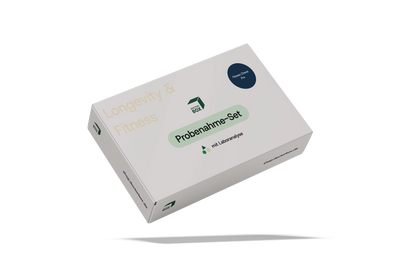
Fitness Check Pro

Fitness Check Pro

Fitness Check Pro – Your health and performance check for body & heart. The Fitness Check Pro gives you comprehensive insights into your muscle an...
Analyse im Fachlabor
Diskrete Verpackung
Ergebnis in 72h

Frequently asked questions about wearable training control

Which wearable is best for training control?

It depends on your priorities. Garmin for outdoor sports and running, Whoop for recovery focus without a display, Oura Ring for sleep, Apple Watch for all-around use with smartphone integration. All measure heart rate and heart rate variability (HRV) accurately enough for effective monitoring.

How accurate are wearable heart rate measurements?

Chest straps are very accurate (similar to an ECG). Wrist sensors are good for stable activities but can be inaccurate during rapid movements or with a poor fit. For critical data (HRV measurement), a chest strap or ring is often better.

Can I achieve the same results with a cheaper tracker?

Basic information (steps, approximate heart rate, sleep duration) is fine. Premium devices are better for precise HRV, detailed sleep phases, and sophisticated algorithms. But: a cheaper tracker is better than none.

What constitutes a good HRV?

It's highly individual – anything from 20 to 100ms is considered 'normal'. What's more important is your personal trend. If your baseline is 50ms and you rise to 60ms, that's progress. Only compare yourself to your own results.

Should I avoid training if my HRV is low?

Not necessarily. Light activity is almost always okay. Intense exertion might not. HRV is one data point, not the only criterion. Combine it with your subjective feeling.

How reliable are sleep phase measurements?

Less reliable than laboratory polysomnography. However, the trend over time is useful, even if individual nights are not perfectly captured. Use it as a guideline, not as absolute truth.

Can wearable tracking become too much?

Yes. Some people become obsessed with data and stress about every fluctuation. If the numbers cause anxiety, track less. Data should help, not burden.

Do I need to check the data every day?

Not necessarily. A quick daily check-in can help with training adjustments. But the weekly trend is often more important than any single day. Find your balance.

How long will it take me to establish my baseline?

Approximately 2-4 weeks of consistent wear are needed for a meaningful baseline. HRV takes time to measure because it is variable. Patience at the beginning pays off.

Can wearables replace a trainer?

No. The data shows WHAT is happening, not always WHY or WHAT TO DO. A good coach interprets the data in context, gives individual recommendations, and sees what wearables don't capture.
Bereit für den nächsten Schritt?

Du hast jetzt alle wichtigen Informationen. Sorge für deine Gesundheit mit einem zuverlässigen Heimtest.

Check your fitness
DoctorBox AI Advisor
Hey! 👋 What health concerns do you have? I will help you find the right test.

AI-powered – Answers may be inaccurate.

Submit Withdrawal Request

Please fill out the following form to submit your withdrawal request.