Posture & Back Fitness: The Path to Upright Posture
Recognize, correct, and prevent posture problems in the long term
Good posture is more than just standing upright – it influences back health, energy levels, self-confidence, and movement quality. This comprehensive guide shows you the most common posture problems of the desk-bound generation, effective exercises for correction, ergonomic optimization of your daily routine, and strategies for long-term improvement.
What does good posture mean and why is it so important?
Posture is more than just standing upright – it describes the alignment and position of your body during all activities, from sitting at your desk to walking to working out at the gym. Good posture enables efficient movement, reduces stress on joints and tissues, and projects confidence and energy.
The biomechanical perspective views posture as the optimal alignment of body segments—head, rib cage, pelvis, and extremities—relative to each other and to gravity. In an ideal posture, an imaginary vertical line runs through the earlobe, shoulder, hip, knee, and ankle. This alignment minimizes the energy required to remain upright against gravity.
The health consequences of poor posture are numerous and often underestimated. Chronic poor posture leads to uneven stress on the intervertebral discs, joints, and muscles. The consequences range from neck and back pain and headaches to breathing difficulties due to a compressed rib cage. In the long term, degenerative changes can be accelerated.
Modern lifestyles negatively impact our posture. Sitting in front of screens for hours promotes a forward head posture, rounded shoulders, and a curled thoracic spine. Smartphones exacerbate this tendency through the constant bending of the neck. These postural patterns become habitual and transfer to other activities.
Correcting postural problems is possible, but it requires a systematic approach. It's not just about consciously straightening up, but about addressing the underlying muscular imbalances and developing new movement patterns. This process takes time and consistency, but the results—less pain, more energy, improved movement quality—are worth the effort.
Common posture problems and their causes
Understanding the most common postural deviations and their causes is the first step towards correction. Different patterns have different causes and require specific interventions.
Forward head posture is the most common posture problem among the screen generation. The head is tilted forward, which overloads the neck muscles. Every centimeter the head is in a forward position increases the effective load on the cervical spine by about 4 kilograms. The causes are screen work, smartphone use, and weak deep neck flexors.
Rounded shoulders – the upper crossed syndrome – manifest as forward-pulled shoulders and a kyphotic thoracic spine. The pectoral and anterior neck muscles are shortened and overactive, while the mid-back muscles and deep neck flexors are weak and inhibited. Prolonged sitting and working in front of the body – typing, driving – exacerbate this pattern.
The lower crossed syndrome affects the pelvis and lumbar spine. An anteriorly tilted pelvis with excessive lumbar lordosis is typical. The hip flexors and back extensors are shortened, while the abdominal and gluteal muscles are weak. Prolonged sitting shortens the hip flexors and weakens the gluteal muscles.
Swayback is a posture in which the pelvis is pushed forward and the upper body is leaned backward to maintain balance. This creates a flattened lumbar spine and increased curvature of the thoracic spine. Overall body tension is reduced, and the person 'hangs' in their passive structures.
Asymmetrical posture – scoliosis and functional asymmetries – manifests as uneven shoulder height, lateral body tilt, or rotation. Functional asymmetries arise from one-sided strain, such as carrying a bag on one side or participating in sports with a dominant side. Structural scoliosis has different causes and requires professional evaluation.
Self-assessment of your attitude
Before you begin the correction process, an honest assessment of your current posture is necessary. Several simple tests will help you identify problem areas and measure your progress.
The wall test is a fundamental method for posture assessment. Stand with your back against a wall, feet about 15 centimeters away. In ideal posture, the back of your head, shoulder blades, and buttocks should touch the wall, while just enough space should fit a hand between your lower back and the wall. Excessive distance between the head and the wall indicates forward head posture; excessive hollowing in the lower back indicates excessive lordosis.
The mirror test from the side provides visual feedback. Look at yourself in the mirror from the side and check if an imaginary line passes through your ear, shoulder, hip, knee, and ankle. Photographs are even more helpful, as they are more objective than self-perception and allow for comparisons over time.
The shoulder flexion test assesses the mobility of the thoracic spine and shoulders. Lie on your back with your legs extended and raise your arms overhead towards the floor. If your arms do not touch the floor while your lower back remains flat, this indicates restricted shoulder or thoracic spine mobility.
The hip flexor test – Thomas test – assesses the length of the hip flexors. Lie on your back at the end of a bench or bed and draw one knee towards your chest. The other leg should remain flat on the surface. If the free leg lifts, the hip flexors are shortened – a common finding in people with sedentary lifestyles.
Documenting your initial situation with photos from the front, side, and back allows for objective progress measurement. Repeating these photos every 4 to 6 weeks reveals changes that might not be noticeable in the mirror. The combination of tests and visual documentation gives you a complete picture of your posture.
Exercises to strengthen postural muscles
Correcting postural problems requires strengthening muscles that are typically weak and inhibited. These 'anti-gravity' muscles keep us upright against the constant downward and forward pull.
Face pulls are one of the most effective exercises for improving upper back posture. Using a cable or band, you pull the weight towards your face while externally rotating your shoulders. This movement strengthens the middle and lower trapezius muscles, the posterior deltoid, and the external rotators of the shoulder – precisely the muscles that are weak in cases of rounded shoulders.
Rows – whether with dumbbells, cables, or bodyweight – train the scapular retractors. The emphasis should be on fully retracting the shoulder blades at the end of the movement, not just on the pulling motion with the arms. Slower, controlled execution with a pause in the contracted position is more effective than fast repetitions.
Chin tucks – pulling the chin back – strengthen the deep neck flexors, which are weak in forward head posture. Against a wall or lying down, pull your chin back as if you were making a double chin, without tilting your head. This small movement is more difficult than it looks and should be practiced with multiple repetitions and longer hold times.
Glute bridges and hip thrusts activate and strengthen the gluteal muscles, which are often weakened by prolonged sitting. The emphasis is on consciously engaging the gluteal muscles at the top of the movement and fully extending the hips without hyperextending the lower back.
Dead bugs and Pallof presses strengthen the deep abdominal muscles, which are important for pelvic stability and a neutral spinal position. These exercises train anti-extension and anti-rotation, the ability to control movement rather than generate it – exactly what is needed for good posture.
Stretching and mobilization for better posture
While strengthening weak muscles is essential, shortened and overactive muscles must also be addressed. The combination of stretching, mobilization, and soft tissue work releases the tension that pulls you into poor posture.
Chest muscle stretches are fundamental for rounded shoulders. The classic doorframe stretch – with your forearm against the door frame and a step forward – stretches the pectoralis major. Variations in arm height target different areas of the muscle. Holds of 30 to 60 seconds, repeated several times a day, are more effective than single, longer stretches.
Thoracic spine mobilization improves the mobility of the often stiff mid-back. Foam roller extensions – lying on your back on the roller in the thoracic spine area with slight extension over the roller – are a good starting point. Thoracic rotations in a quadruped position and Thread the Needle exercises improve rotational ability.
Hip flexor stretches target muscles shortened by sitting. The classic lunge stretch with the back knee on the floor is effective when the glutes are actively engaged to tilt the pelvis backward. Couch stretches and half-kneeling variations with lateral flexion intensify the stretch of the psoas muscle.
Neck muscle stretches – especially for the upper trapezius and sternocleidomastoid muscles – release tension associated with a forward head posture. Gentle lateral tilting of the head with a light pull from the hand, without rotation, stretches the upper trapezius. Slow, controlled movements are more important for the neck muscles than intense stretching.
Self-myofascial release with foam rollers and balls can target tense areas. Using a lacrosse ball against a wall for the chest muscles, a foam roller for the upper back, and a roller for the hip flexors and quadriceps – these techniques complement stretching and can be performed several times a day.
Back health and prevention of back pain
Back pain is one of the most common ailments in modern society and is closely linked to postural problems. A proactive approach to back health can prevent problems before they arise or alleviate existing discomfort.
The spine is a remarkable structure that combines stability and mobility. It is not designed to remain in one position for hours on end – whether sitting or standing. The best posture is the next one: Regular changes of position and movement keep the spine healthy.
The health of the intervertebral discs depends on movement. Intervertebral discs have no direct blood supply and are nourished by diffusion – movement 'pumps' nutrients into the tissue. Prolonged sitting with constant pressure on certain areas of the disc is less beneficial than changing positions and regular movement.
The deep core muscles – transversus abdominis and multifidus – are the primary stabilizers of the spine. In people with back problems, these muscles are often delayed in their activation or atrophied. Targeted training of these deep stabilizers, often learned with the help of a physiotherapist, is a cornerstone of back rehabilitation and prevention.
McGill's Big Three – Curl-Up, Side Plank, and Bird Dog – are scientifically validated exercises for back health, developed by spinal biomechanics expert Dr. Stuart McGill. These exercises strengthen the core muscles without placing excessive stress on the spine and are safer for people with back problems than many popular abdominal exercises.
Regular health checkups can help identify risk factors for back problems early. Inflammatory markers, vitamin D levels, and other values can indicate an increased risk and enable proactive measures.
Sicherheit durch Testen
Jetzt wo du die Symptome kennst: Verschaffe dir Klarheit mit einem diskreten Heimtest.
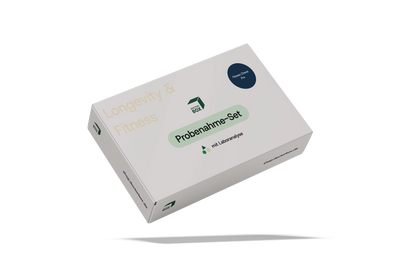
Fitness Check Pro – Your health and performance check for body & heart.
The Fitness Check Pro gives you comprehensive insights into your muscle an...
Analyse im Fachlabor
Diskrete Verpackung
Ergebnis in 72h
Ergonomics in the workplace
Since many people spend eight or more hours a day at their desks, workplace ergonomics is a crucial factor for posture. Optimally setting up a workstation can prevent posture problems or reduce existing ones.
Screen position is critical. The monitor should be positioned so that its top edge is at eye level or slightly below. The distance to the screen should be about an arm's length. For laptops, an external monitor or a laptop stand with a separate keyboard is important to avoid constantly looking down.
The chair height should be adjusted so that the feet are flat on the floor and the knees are bent at approximately 90 degrees. The thighs should be parallel to the floor or slightly angled downwards. A chair with good lumbar support supports the natural curvature of the lumbar spine.
The keyboard and mouse should be positioned so that the elbows are bent at approximately 90 degrees and the forearms are parallel to the floor. The shoulders should be relaxed, not hunched. A wrist rest can be helpful, but typing itself should be done with the wrists floating freely.
Sit-stand desks allow you to alternate between sitting and standing and are one of the most valuable investments for office workers. The rule is not to stand all day – which is also problematic – but to regularly switch between positions. Changing position every 30 to 60 minutes is ideal.
Movement breaks are at least as important as ergonomic furniture. Even the best chair adjustment cannot compensate for hours of sitting without moving. Short breaks every 30 to 45 minutes to stand up, stretch, or walk around interrupt static strain and keep you more alert and productive.
Integrate posture training into everyday life
Correcting posture problems doesn't just happen at the gym or during targeted exercises, but primarily through changing everyday habits. Integrating posture awareness into your daily routine is the key to lasting improvement.
Posture reminders can help raise awareness. Apps that regularly remind you to maintain good posture, or simple strategies like a sticker on your monitor, serve as triggers to check and correct your posture. Over time, good posture becomes a habit, and the reminders become less necessary.
Improving your posture is a process. Many people with poor posture feel 'straight' in their usual position, even though they aren't. Regularly checking your posture against a wall or in a mirror recalibrates your body awareness. The corrected position may feel 'wrong' at first, but over time it will become the new normal.
Micro-exercises spread throughout the day accumulate into significant training volume. Chin tucks while waiting at a traffic light, scapular retraction at a desk, conscious activation of the gluteal muscles while standing – these small interventions take no extra time and reinforce the desired patterns.
Sleeping position influences posture more than many realize. Side sleepers benefit from a pillow between their knees to maintain spinal alignment. Stomach sleepers tend to experience neck problems and excessive lordosis (lordosis). Sleeping on your back with a flat pillow under your head and optionally under your knees is often optimal for spinal alignment.
Carrying heavy bags or backpacks affects posture. A well-fitting backpack with both shoulder straps distributes the load symmetrically. Bags worn only on one side should be switched regularly. The weight should be kept as light as practically possible.
Common mistakes in posture correction
The path to better posture is not always straightforward, and certain mistakes can slow progress or even create new problems. Recognizing these mistakes helps to avoid them.
Excessive "shoulder pull" is a common misconception. Many people trying to correct rounded shoulders pull them back and down excessively, holding this position with effort. The result is often tension in the upper trapezius muscles instead of a relaxed, natural posture. The shoulders should be rotated backward, not forcibly pulled back.
Overcorrection to the other extreme can cause new problems. Someone with excessive lordosis who tries to keep their back flat can overcorrect into kyphosis. Someone with a forward head posture who aggressively pulls their head back can create neck tension. The neutral position is the goal, not the opposite extreme.
Focusing solely on strength or solely on stretching is incomplete. Postural problems arise from an imbalance of shortened and weak muscles. Stretching alone temporarily releases tension, but without strengthening, the pattern returns. Strengthening alone can be problematic if the necessary flexibility for correct movement patterns is lacking. A balanced approach is essential.
Impatience and inconsistency undermine progress. Attitude patterns have developed over years and don't change in weeks. New patterns must become habits through constant repetition. Sporadic efforts followed by relapses into old habits lead to frustration. Consistent, small steps over months bring sustainable results.
Ignoring pain or discomfort is dangerous. While mild discomfort may be normal when correcting long-standing patterns, pain is a warning sign. If pain, numbness, or other neurological symptoms persist, professional help should be sought before continuing training.
Long-term strategies for lasting posture improvement
Sustainable posture improvement requires more than a short correction program – it is about developing a lifelong movement lifestyle and continuous attention to body position in all activities.
Variety of movement is key to postural health. The human body is designed for movement, not for hours of static positions. Integrating different forms of movement – walking, strength training, yoga, swimming, dancing – into your daily routine keeps your musculoskeletal system balanced and prevents the limitations that arise from monotonous movement patterns.
Body awareness as a developed skill is valuable beyond mere posture. The ability to feel your body, perceive tension, and correct your position is a skill that benefits all areas of life. Practices like yoga, tai chi, or Feldenkrais systematically develop this body awareness.
Strength training as a foundation for posture should be a lifelong part of your routine. The muscles that keep you upright need regular stimulation to maintain their function. This becomes even more important with age, as natural muscle loss can negatively affect posture if it isn't counteracted by exercise.
Regular self-assessment allows for the early detection of relapses or new problems. Monthly posture photos, regular self-tests, and attention to new symptoms help identify deviations before they become entrenched. Prevention is more effective than correction.
Professional support can be invaluable for persistent problems or specific concerns. Physiotherapists, chiropractors, osteopaths, and qualified personal trainers can identify individual issues and recommend targeted interventions. The combination of professional guidance and independent daily practice yields the best results.
Häufig gestellte Fragen
Noticeable improvements can occur within 2 to 4 weeks of consistent work, but lasting change typically requires 3 to 6 months. Postural patterns have developed over years, and the tissues have adapted. Realignment requires changes in muscle length, strength, and neural programming. The good news: progress is cumulative. Every day of consistent practice brings you closer to your goal, even if the changes are imperceptible on a daily basis.
The relationship between posture and back pain is more complex than often portrayed. Poor posture alone does not necessarily cause pain, and people with 'perfect' posture can still experience back problems. However, certain postural patterns can increase stress on specific structures and contribute to discomfort. The combination of postural problems, lack of exercise, and other factors such as stress is often more relevant than posture alone. Correcting postural problems is one component of a comprehensive approach to back health.
Posture correctors can be useful as a short-term reminder, but they are not a long-term solution. They can help raise awareness of shoulder position, but they don't replace the development of the muscle strength necessary for a natural, upright posture. Relying on external supports can even be counterproductive, as it relieves your own muscles of their task. If you use a corrector, it should be for a limited time and accompanied by active posture training.
Yoga can be a valuable component of a posture improvement program. It combines stretching of shortened areas, strengthening through holding exercises, and developing body awareness. Certain yoga styles and poses are particularly relevant to posture: backbends open the chest, twists mobilize the thoracic spine, and standing poses develop core strength and alignment. However, not every yoga practice is equally effective for posture, and a focused program with specific strengthening and stretching exercises can deliver faster results.
Unbalanced strength training can actually exacerbate existing postural problems or create new ones. If you train your chest and front deltoids extensively without adequate back work, you'll reinforce the pattern of rounded shoulders. The solution is balanced training with an emphasis on the back: more pulling exercises than pushing exercises, a focus on the mid-back and rotator cuff, and conscious work on mobility. Proper strength training with the right priorities improves posture; unbalanced training can worsen it.
Short daily sessions are more effective than sporadic long sessions. Ideally, you should integrate posture work on three levels: several short movement intervals and posture checks of 1 to 2 minutes each day; a targeted 10- to 15-minute routine once a day, including stretching and light strengthening; and more intensive strength training two to three times a week, focusing on the muscles relevant to posture. This combination of frequent small interventions and regular targeted training yields the best results.
A standing desk alone isn't automatically better – standing all day has its own problems, such as strain on the legs and lower back. The real advantage of a sit-stand desk is the ability to regularly switch between positions. Variation – not the specific position – is key. If an adjustable desk isn't possible, regular movement breaks, phone calls while standing, and walking meetings can offer similar benefits. The best position is the next one.
Yes, and the problem is growing with increasing screen time and sedentary lifestyles. Children today spend more time hunched over devices than any generation before them. The good news is that children adapt faster than adults, both negatively and positively. Early intervention through promoting physical activity, limiting screen time, and age-appropriate exercise is effective. Parents' example—good posture and an active lifestyle—influences children more than admonishments.
Professional evaluation is recommended for persistent pain that does not respond to self-treatment, neurological symptoms such as numbness, tingling, or weakness, visible structural asymmetries such as pronounced scoliosis, after accidents or injuries, and if self-diagnosis and treatment do not lead to improvement after 4 to 6 weeks. Physical therapists, orthopedic surgeons, or specialized trainers can identify problems that may not be apparent to the individual and develop personalized treatment plans.
Yes, improving posture is possible at any age, although the process may take longer in older adults. Tissues remain adaptable, even if the rate of adaptation decreases. Maintaining strength against gravity and mobility in the thoracic spine is particularly important in old age. Kyphotic posture, often associated with aging, is largely preventable through lifelong movement and targeted training. It's never too late to start, but starting earlier is better.
Bereit für den nächsten Schritt?
Du hast jetzt alle wichtigen Informationen. Sorge für deine Gesundheit mit einem zuverlässigen Heimtest.