Skip to content

Kraft & Körperkomposition

Powerlifting: The complete introduction to powerlifting

Squats, bench press, deadlifts – systematically build maximum strength

Powerlifting is the purest form of strength training: three exercises, one goal – to lift as much weight as possible. In this comprehensive guide, you'll learn everything about the three competition exercises, optimal training plans for beginners and advanced lifters, technique optimization, and how to prepare for your first competition. Whether you want to build strength for other sports, improve your health, or actually compete – powerlifting offers a clear, measurable path to systematic strength.

In short, explained

  • Three exercises: squats, bench presses, and deadlifts make up the powerlifting competition.
  • Measurable goals: Objective increase in strength without subjective evaluation.
  • Health benefits: Improved bone density, insulin sensitivity, and muscle preservation.
  • For everyone: Weight classes and age groups allow for fair comparisons.

What is powerlifting and why is it worthwhile?

Powerlifting is a strength sport that focuses on three fundamental exercises: the squat, the bench press, and the deadlift. Unlike bodybuilding, it's not about the appearance of the muscles, but solely about how much weight you can lift in these three disciplines. This focus makes powerlifting one of the purest forms of strength training and provides a clear, measurable benchmark for your progress.

The history of powerlifting dates back to the 1950s and 1960s, when the discipline evolved from Olympic weightlifting and general strength training. Today, powerlifting is organized globally, with national and international federations that host competitions from the local to the world championship level. Even if you never intend to compete, the principles of powerlifting provide an excellent framework for systematic strength training.

The appeal of powerlifting lies in its simplicity and honesty. You either lift the weight—with proper technique and without prohibited aids—or you don't. There's no subjective judging like in other sports. This objectivity makes progress clearly measurable and motivates many people to continuously improve. The feeling of achieving a personal best is incomparably satisfying.

Powerlifting offers significant health benefits that extend beyond simply increasing strength. Training the three basic exercises strengthens the entire musculature of the body, improves bone density, promotes posture, and increases basal metabolic rate. Studies show that strength training reduces the risk of diabetes, heart disease, and age-related muscle weakness. The discipline and consistency required for powerlifting often translate to other areas of life.

Contrary to popular belief, powerlifting is not an exclusive sport for genetically gifted individuals or young people. Competitions are divided by weight class, age, and often equipment categories, allowing everyone to compete at their own level. Women, seniors, and people with varying physical abilities find an inclusive community in powerlifting. The barrier to entry is low – you don't need expensive equipment, just access to a barbell and basic weights.
The three competition exercises in detail

The squat is the first discipline in a powerlifting competition and is considered by many to be the most demanding exercise. You place the barbell on your upper back, squat down until your hips are lower than your knees, and then stand back up. This seemingly simple movement requires strength in almost all of your body's muscles: quadriceps, glutes, adductors, lower back, abdominal muscles, and even the upper back are actively involved.

The squat is divided into high-bar and low-bar variations. High-bar positions the bar on the trapezius muscle, allowing for a more upright torso posture. Low-bar places the bar lower on the rear deltoid muscle, leans the torso further forward, and allows most people to lift heavier weights. Therefore, the low-bar variation dominates in competitive powerlifting, while weightlifters traditionally prefer high-bar.

The bench press is the second discipline and primarily tests upper body pressing strength. You lie on your back on a bench, take the bar from the rack, lower it to your chest in a controlled manner, and press it back up. In competition, the bar must rest motionless on your chest for a moment before the referee gives the command to press it back up – a rule to prevent cheating.

The technique for bench pressing is more complex than it appears. A controlled arch in the back, firm shoulder blades, active leg engagement, and an optimized grip width maximize power transfer. Competitive powerlifters often develop a pronounced arch to shorten the range of motion—a legitimate technique optimization within the rules. However, for health and muscle development, a more moderate approach is often preferable.

The deadlift is the final and often decisive event of a competition. You lift the bar from the floor until you are standing upright with your hips and knees fully extended. The two main variations are conventional, with a shoulder-width stance, and sumo, with legs spread wide. The choice depends on your anatomy, leverage, and personal preference—both are permitted in competition.

The deadlift engages the entire posterior chain: erector spinae, glutes, hamstrings, as well as forearms and grip strength. It's the exercise in which most people can lift the heaviest absolute weight, making it a particularly impressive feat. At the same time, proper deadlifting technique is demanding – a rounded lower back under heavy loads can lead to injury and requires special attention in technique development.

Training plan for powerlifting beginners

As a beginner powerlifter, you benefit from a phenomenon that experienced athletes envy: rapid strength gains in the first few months of training. Your nervous system learns to recruit muscle fibers more efficiently, your technique improves rapidly, and you get stronger even without significant muscle growth. A structured training plan optimally utilizes this potential.

Linear progression is the core principle for beginners: you increase the weight from workout to workout as long as it's possible. A typical beginner plan includes three workouts per week with all three exercises or a rotation of squats, bench presses, and deadlifts. Programs like Starting Strength, StrongLifts 5x5, or GZCLP have proven effective for this purpose and follow the principle of linear progression.

The training frequency should be high at the beginning – ideally, you should train each exercise two to three times a week. This high frequency accelerates motor learning and gives you more opportunities to refine your technique. As training intensity and experience increase, recovery becomes more demanding, and the frequency can be reduced.

Volume and intensity must be carefully balanced. Beginners typically work with 3 to 5 sets of 5 repetitions at a moderate intensity of about 70 to 85 percent of their maximum. These parameters allow for technical learning while still providing sufficient strength stimulation. Using weights that are too heavy with poor technique leads to injuries and ingrained bad habits—a price you'll pay dearly for later.

Assistance exercises complement the three main exercises and address weaknesses or muscle groups that are important for competition lifts. For the squat, these can include leg presses, lunges, or leg extensions. The bench press benefits from overhead presses, dips, and triceps exercises. The deadlift is supported by Romanian deadlifts, rows, and back extensions. As a beginner, however, you don't need much assistance work—focus primarily on the main exercises.

Technique development should be a priority from the very beginning. Invest time in learning correct movement patterns, ideally with video analysis or under the guidance of experienced lifters. Errors that creep in during the first few months are difficult to correct later. A slower initial progress with perfect technique pays off in the long run – both in terms of maximum strength and injury prevention.

Advanced training concepts and periodization

When linear progression comes to an end—typically after 6 to 12 months of consistent training—you need more sophisticated planning strategies. Periodization structures your training into phases with different goals and enables continuous progress even for advanced athletes whose adaptability has slowed.

Block periodization divides training into consecutive blocks with specific focuses. A typical cycle begins with a hypertrophy block, which builds muscle cross-sectional area and work capacity. This is followed by a strength block with higher intensity and lower volume. The final peaking block prepares for maximum performance in a competition or test. Each block typically lasts 3 to 6 weeks.

Undulating periodization varies volume and intensity within shorter timeframes. Daily undulating periodization changes the parameters from workout to workout: Monday heavy with low repetitions, Wednesday moderate, Friday lighter with more repetitions. This variation can promote adaptation and reduce monotony, but requires careful recovery planning.

Relative Intensity Training (RPE or RIR) replaces fixed percentages with subjective assessments of effort. An RPE of 8 means you could have done 2 more repetitions. This approach accounts for fluctuations in daily form and avoids chronic over- or under-training. However, RPE-based training requires honest self-assessment and experience in calibration.

Specificity becomes increasingly important for advanced powerlifters. While beginners benefit from a variety of movements, experienced athletes should invest the majority of their training energy in competition lifts and their direct variations. The principle of 'train like you compete' means that technique, tempo, and equipment in training should be as close to competition as possible.

Deload weeks are planned recovery phases with reduced volume and intensity. After 3 to 6 weeks of demanding training, a deload allows for complete recovery and supercompensation. Many powerlifters find they are stronger after a deload than before—a sign that accumulated fatigue has been limiting their previous performance. Don't ignore these recovery weeks in your pursuit of consistent training.

Technical optimization for maximum power output

Technique in powerlifting is not an aesthetic matter, but rather biomechanical optimization for maximum force transmission. The 'best' technique varies depending on individual anatomy – limb lengths, joint angles, and muscle insertions all influence which variations are optimal for you. Finding your ideal technique is an ongoing process.

In the squat, stance width determines which muscles are primarily engaged and how deep you can go. A wider stance increases hip involvement and shortens the range of motion, but requires good hip mobility and adductor strength. Foot position – angled outward – should allow the knees to track over the toes. The depth must comply with competition rules: the hip crease must drop below the top of the knees.

The setup for the bench press begins with positioning on the bench. Pulling the shoulder blades together and pressing them down creates a stable platform. A controlled arch in the thoracic spine shortens the range of motion and improves shoulder stability. The grip should be wide enough that the forearms are vertical at the bottom of the movement – ​​the individual sweet spot depends on arm length and shoulder mobility.

When deadlifting, the choice between conventional and sumo is fundamental. Conventional uses a narrower stance with the hands outside the legs. Sumo has a wide stance with the feet wide apart and the hands gripping between the legs. Longer arms and a shorter torso often favor conventional, while longer legs and a longer torso can favor sumo. Experiment with both styles to find what works best for you.

The breathing technique – the Valsalva maneuver – is crucial for all three exercises. You inhale deeply, tense your abdominal muscles against the inhaled pressure, and maintain this tension throughout the entire repetition. This increase in intra-abdominal pressure stabilizes the spine and allows for the safe transfer of high forces. Learn this technique thoroughly – it's the key to heavy, safe lifts.

Weakness analysis identifies the point at which you fail during an exercise and derives targeted assistance training. If you fail the squat from the hole, you need more quadriceps and glute strength. If the bench press fails at lockout, the triceps are the limiting factor. If the deadlift sticks to the floor, you lack initial pulling strength. Targeted assistance exercises and variations address these specific weaknesses.

Health monitoring and lab results for strength athletes

Powerlifting places high demands on your body, and regular health monitoring helps you optimize both performance and long-term health. Certain lab values ​​are particularly relevant for strength athletes and can reveal hidden limitations that are hindering your progress.

Testosterone is crucial for strength performance and recovery. Low testosterone levels can manifest as reduced strength, poor recovery, decreased motivation, and increased body fat. In addition to total testosterone, free testosterone is important, as only this unbound fraction is biologically active. Chronic overtraining, sleep deprivation, and extreme calorie deficits can impair testosterone production.

Thyroid function influences metabolism, energy levels, and indirectly, physical performance. Subclinical hypothyroidism can manifest as fatigue, weight gain despite a controlled diet, and slowed recovery. TSH, free T3, and free T4 provide a comprehensive picture of thyroid function and should be investigated if corresponding symptoms are present.

Iron status is particularly relevant for endurance and recovery. Ferritin, the storage form of iron, can be low even without anemia and impair performance. Intense training increases iron requirements, and women have a particularly high risk of iron deficiency due to menstruation. A ferritin level of at least 50 ng/ml, ideally higher, is recommended for optimal athletic performance.

Inflammatory markers like CRP indicate systemic inflammation, which can impair recovery and adaptation. Chronically elevated CRP levels can point to overtraining, hidden infections, or a pro-inflammatory diet. Monitoring this marker helps optimize the balance between training load and recovery.

Vitamin D plays a crucial role in muscle strength, hormone production, and immune function. Deficiency is common in our latitudes, especially among people who spend a lot of time indoors – which often includes strength athletes in gyms. A vitamin D level of at least 40 ng/ml is recommended for athletes and can be achieved through supplementation in cases of deficiency.

Sicherheit durch Testen

Jetzt wo du die Symptome kennst: Verschaffe dir Klarheit mit einem diskreten Heimtest.

Fitness Check Pro

Empfohlener Heimtest

Fitness Check Pro

Fitness Check Pro

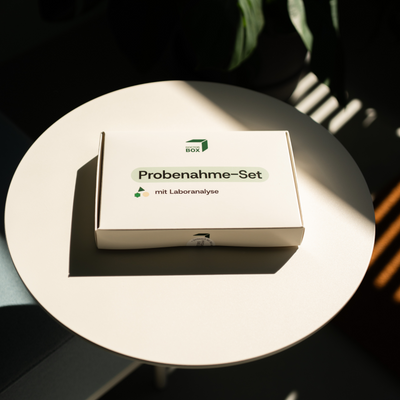
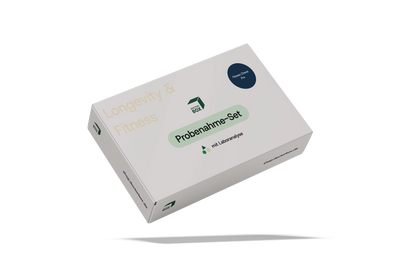
Fitness Check Pro – Your health and performance check for body & heart. The Fitness Check Pro gives you comprehensive insights into your muscle an...
Analyse im Fachlabor
Diskrete Verpackung
Ergebnis in 72h

Nutrition for strength training and powerlifting

Nutrition in powerlifting differs from other sports in its focus on strength performance rather than endurance or aesthetics. Nevertheless, energy intake, macronutrient distribution, and timing significantly influence how well you can train, recover, and progress.

Your calorie intake depends on your goals. For strength gains and muscle growth, a moderate calorie surplus of 200 to 500 calories above your maintenance level is beneficial. If you want to compete in a specific weight class, you may need to incorporate periods of calorie deficit—ideally well in advance of a competition to avoid compromising strength performance. Aggressive diets right before a competition often cost more energy than the advantage of competing in a lower weight class would otherwise provide.

Protein is the most critical macronutrient for strength athletes. The recommendation is 1.6 to 2.2 grams per kilogram of body weight daily, with a higher intake appropriate for those in a calorie deficit. Distribute your protein intake across 4 to 5 meals, with 30 to 50 grams per meal, for optimal muscle protein synthesis. High-quality protein sources such as meat, fish, eggs, dairy products, and legumes should form the basis of your diet.

Carbohydrates are the primary fuel for intense strength training. They replenish glycogen stores, which are needed for maximum strength performance. An intake of 3 to 6 grams per kilogram of body weight is appropriate for most powerlifters, although the exact requirement depends on training volume and individual tolerance. Timing around training can optimize performance—carbohydrates before training for energy, and after training for glycogen resynthesis.

Fats should not be neglected, as they are important for hormone production. At least 0.8 to 1 gram of fat per kilogram of body weight ensures testosterone production and overall health. Focus on unsaturated fatty acids from olive oil, nuts, and oily fish, without completely avoiding saturated fats.

Hydration affects strength performance more than often assumed. Even moderate dehydration of 2 to 3 percent can reduce strength by 10 percent or more. Drink enough water throughout the day and pay particular attention to hydration before and during training. Electrolyte drinks can be beneficial for longer training sessions.

Equipment and gear in powerlifting

Powerlifting is fundamentally a minimalist sport – you need a barbell, weights, and a bench. However, the right equipment can improve both safety and performance. It's important to distinguish between permitted competition equipment and equipment used purely for training.

A weightlifting belt stabilizes the torso by providing resistance to the abdominal muscles during pressing, thus increasing intra-abdominal pressure. Studies show that a belt can improve performance in heavy squats and deadlifts by 5 to 15 percent. For powerlifters, a 10 to 13 mm thick leather belt with a consistent width is recommended. Use the belt primarily for heavy working sets – lighter sets without a belt strengthen natural core stability.

Knee braces and knee sleeves offer warmth, compression, and, depending on the type, mechanical support. Neoprene sleeves warm the knee joint and can help with discomfort, but they don't provide significant support. Rigid knee braces, like those used in the equipped division, can add considerable weight to the squat, but are not allowed in raw powerlifting.

Wrist wraps stabilize the wrist during pressing movements and prevent excessive extension under load. They are especially helpful during bench presses and overhead presses if you are prone to wrist problems. Stiffness varies – choose stiffer wraps for heavy loads and more flexible models for greater freedom of movement.

Powerlifting shoes have a firm, non-compressive sole and often a raised heel. The hard sole maximizes force transfer to the ground, unlike cushioned running shoes which absorb energy. The raised heel improves squat mechanics for many lifters but is often a disadvantage in deadlifts. Therefore, many powerlifters use different shoes for different exercises or even dedicated deadlift shoes.

Chalk significantly improves grip during deadlifts and rows. Magnesium carbonate absorbs sweat and increases friction between the hand and the bar. Most gyms allow chalk, and some offer liquid alternatives. For competitions, chalk is standard practice and almost essential for heavy lifts.

The distinction between raw and equipped powerlifting is fundamental. Raw allows only minimal equipment – ​​belts, wrist wraps, and knee sleeves. Equipped powerlifting uses additional specialized suits and wraps that provide significant mechanical support and considerably increase the numbers. As a beginner, you will almost always start in the raw category.

Injury prevention and longevity in strength training

Powerlifting has a reputation as an injury-prone sport, but with a smart approach, you can lift heavy weights for decades. Most injuries aren't caused by the weight itself, but by poor technique, too rapid progression, insufficient recovery, or ignoring the body's warning signals.

Warming up is not optional, it's essential. A thorough warm-up raises body temperature, improves joint mobility, and prepares the nervous system for heavy loads. Start with general cardio, followed by dynamic mobility exercises for the relevant joints. Then, progressively increase the weight in your main exercises over several warm-up sets before beginning your working sets.

Technical integrity under fatigue is crucial. If your form breaks down with heavy weights—rounded back during deadlifts, collapsed knees during squats—the weight is too heavy or you're too exhausted. Learn to abort a lift when your technique fails, instead of forcing it at all costs. Ego-lifting is the fastest route to injury.

Progressive overload must be intelligently managed. Jumps of 10 or 20 kilograms may be tempting, but often lead to overuse injuries. For advanced lifters, increases of 2.5 kilograms or less per week or month are realistic and sustainable. Microplates allow for small progression steps, especially in bench pressing.

Active recovery and mobility work keep joints healthy and flexible. Powerlifting shortens certain muscle groups over time and can restrict mobility. Regular stretching, fascia work, and mobility exercises counteract these effects. Hip mobility for the squat and shoulder mobility for the bench press deserve particular attention.

Listen to your body – pain is a warning signal. Muscle soreness and fatigue are normal, but sharp, localized pain in joints or tendons should be taken seriously. Pushing through pain while training usually makes the problem worse. Adjust your workout: reduce weight, switch to pain-free variations, or rest until the pain subsides. Chronic problems require professional evaluation by a sports medicine physician or physical therapist.

Long-term thinking distinguishes successful powerlifters from those who have to quit after just a few years. The question isn't how much you can lift this week, but how strong you can be in 10 or 20 years. Patience, consistency, and respect for your own limits are the keys to a long and successful powerlifting career.

The road to the first competition

Participating in a powerlifting competition is a transformative experience, even if you don't intend to compete seriously. The structured framework with rules, judges, and spectators tests not only your strength but also your mental fortitude and ability to perform under pressure.

Preparation begins with choosing the right competition. Look for a local or regional event suitable for beginners. Most federations offer beginner categories or 'Novice' divisions. Register at least 8 to 12 weeks before the competition to allow sufficient time for specific preparation. Study the federation's rules – technical regulations, permitted equipment, and procedures vary between federations.

Peaking – the final preparation for maximum performance on race day – follows specific principles. In the last two to three weeks before the competition, you drastically reduce your training volume while maintaining high intensity. This taper phase allows for complete recovery while preserving strength adaptations. The last heavy training session should take place approximately one week before the competition.

The choice of attempts is tactically important. You have three attempts per exercise. The first attempt should be a safe opener – a weight you can easily manage even on an off day. This is typically 90 to 93 percent of your training maximum. The second attempt is a solid build-up, and the third is your maximum attempt. This conservative strategy maximizes your chances of a successful competition with all nine valid attempts.

On competition day itself, routine is crucial. Eat and drink as usual, no experiments. Allow plenty of time for travel and warm-up. Official check-in, including weigh-in and equipment inspection, usually takes place in the morning or the evening before. Follow the competition schedule and be in the warm-up room in good time, about 30 to 45 minutes before your first attempt.

The powerlifting community is surprisingly supportive and welcoming to newcomers. Experienced athletes are happy to answer questions, and coaches and referees explain the procedures. Your first goal should be to complete all nine lifts successfully and enjoy the experience. Records and rankings can come later – the initial focus is on learning the competition process and becoming part of the community.

Häufig gestellte Fragen

You don't need to have any particular strength to start powerlifting. Everyone starts somewhere, and strength comes through consistent training. The standard barbell weighs 20 kilograms, which is already challenging for some – that's perfectly fine. Many gyms also have lighter bars. More important than your starting point is your willingness to learn technique and train consistently. The powerlifting community welcomes beginners of all strength levels.

Powerlifting, when performed with proper technique, is no more dangerous for your back than other activities – in fact, it can strengthen and protect it. The back muscles developed through squats and deadlifts stabilize the spine in everyday life. Injuries usually result from poor technique, progressing too quickly, or ignoring warning signs. Learn the exercises under qualified instruction, increase the weight progressively, and respect pain signals. People with pre-existing back problems should seek medical advice before starting.

Powerlifting and bodybuilding have different goals and therefore different training approaches. Powerlifting optimizes for maximum strength in three specific exercises – appearance is secondary. Bodybuilding aims for aesthetic muscle development, symmetry, and definition – actual strength is secondary. The training differs accordingly: Powerlifters focus on a few exercises with heavy weights and low repetitions, while bodybuilders use a wider variety of exercises, higher repetitions, and more isolation work. Many people combine elements of both approaches.

The choice between conventional and sumo deadlifts depends on your individual anatomy, mobility, and preference. Conventional deadlifts utilize a shoulder-width stance with hands outside your legs and place more emphasis on the lower back. Sumo deadlifts have a wide stance with hands between your legs and engage your hips and adductors more. People with longer arms and a shorter torso often tend to favor conventional deadlifts, while longer legs can favor sumo deadlifts. Try both styles for several weeks to see which feels more natural and shows greater potential.

Technically, you can participate in a competition after just a few months of training – there are no minimum requirements in terms of strength or experience. However, in practice, a training period of 6 to 12 months is recommended to develop solid technique and master the basic exercises. During this time, you will also become familiar with the competition format and develop realistic expectations. Your first competition should focus less on placement and more on gaining experience and successfully completing all attempts.

A qualified coach is helpful, but not essential. The advantages of a coach lie in objective technique analysis, individualized program design, and motivation. Especially for advanced lifters or those preparing for competitions, professional guidance can make all the difference. Beginners can start with good resources—books, videos, online programs—and self-study. Video analysis of your own training and feedback from experienced lifters in the community complement the self-learning process. If budget or availability is limited, focus on the fundamentals and seek expert advice only when needed.

The optimal training frequency depends on your experience, recovery capacity, and available time. Beginners often benefit from three training sessions per week, covering all three main exercises. This allows for a high training frequency with sufficient recovery. More advanced trainees can increase to four or five sessions, potentially training individual exercises less frequently. The quality of recovery—sleep, nutrition, stress management—ultimately determines how much training is beneficial. More isn't always better.

Weight classes exist to allow for fair comparisons – obviously, a 120-kilogram athlete can lift significantly more than someone who weighs 60 kilograms. In competition, you compete against athletes in your weight class. For beginners, the weight class is largely irrelevant – train and eat for health and strength, not for a specific class. Only when you want to compete seriously does it make sense to consider which class you are most competitive in. Extreme weight manipulation before competitions is neither necessary nor advisable for recreational athletes.

Combining powerlifting and endurance training is possible, but requires careful planning. Excessive cardio can hinder strength adaptations, but moderate amounts are unproblematic and beneficial to your health. As a guideline, 2 to 3 moderate cardio sessions of 20 to 30 minutes per week are compatible with powerlifting. Low-intensity steady-state activities like walking or easy cycling are less disruptive than high-intensity interval training. Schedule cardio and strength training separately, or do cardio after strength training. The priority should be clear—if strength is the primary goal, cardio should not compromise it.

Strength goals vary greatly depending on body weight, gender, age, and training experience. Common milestones for male lifters include reaching 1.5 times body weight in the squat, 1.25 times in the bench press, and 2 times body weight in the deadlift after 1 to 2 years of training. Women typically achieve about 70 to 80 percent of these values. Advanced standards are significantly higher. Wilks or DOTS scoring systems allow for comparisons across weight classes. Ultimately, the most important comparison is with your past self—continuous personal improvement is the most sustainable goal.

Bereit für den nächsten Schritt?

Du hast jetzt alle wichtigen Informationen. Sorge für deine Gesundheit mit einem zuverlässigen Heimtest.

Fitness Check Pro
DoctorBox AI Advisor
Hey! 👋 What health concerns do you have? I will help you find the right test.

AI-powered – Answers may be inaccurate.