Skip to content

Sport & Bewegung

Injury comeback: The road back to training

Return-to-Train systematically and safely

An injury isn't the end. With the right approach, you'll come back stronger. From the acute phase through rehabilitation to a full return to sport.

In short, explained

  • Healing phases: Acute, Repair, Remodeling
  • 10% rule: Maximum 10% increase per week
  • Progression: Movement → Load → Dynamics → Sport
  • Prevention: Eliminate the cause of the injury

Injury comeback: The road back to training

It's happened. Ligament injury, muscle tear, stress fracture, or a persistent overuse syndrome. Your training is interrupted, and you're wondering what to do next.

The weeks of enforced rest are frustrating. You see your fitness dwindling, feel helpless, and want to get back as quickly as possible. But it's precisely this impatience that often leads to relapses and renewed injuries.

A successful comeback requires strategy. Systematic development instead of blindly training. Respect for the injury instead of ignoring warning signs. Patience instead of haste.

This guide shows you the way back – from acute injury through rehabilitation to a full return to sport. Evidence-based, practical, realistic.

Understanding the phases of healing

Every injury goes through healing phases. Understanding these phases is fundamental for a successful comeback.

Acute phase (inflammation): The first few days. Swelling, pain, redness, heat. The body begins the repair process. Now: Rest, RICE principle (Rest, Ice, Compression, Elevation) or, according to more recent research, PEACE & LOVE (Protection, Elevation, Avoidance, Compression, Education, Load, Optimism, Vascularization, Exercise).

Proliferation phase (repair): Days to weeks after the injury. New tissue is formed. Still fragile, but initial stress is possible. Controlled movement begins – range of motion is maintained, gentle activation is permitted.

Remodeling phase: weeks to months. The new tissue becomes more resilient. Progressive overload is now important – the tissue adapts to the stress. Too little stress results in weak tissue.

The duration varies: a muscle strain heals faster than a cruciate ligament tear. A bone fracture heals differently than a tendon irritation. A doctor's assessment is important for realistic timeframes.

The mental side of the injury

An injury is not just physical. The psychological component is often underestimated.

Stages of grief: Denial ('It's not that bad'), anger ('Why me?'), bargaining ('If I ignore it...'), depression ('I'll never get better'), acceptance ('Okay, that's the situation'). These stages are normal.

Loss of identity: When sport is central to your life, an injury can feel existential. Who am I without training? These thoughts are understandable and common.

Fear of re-injury: Often the biggest obstacle to a comeback. The body may be ready, but the mind holds back. This fear must be addressed – through gradual training and building trust.

Isolation: Training partners continue training, but you don't. The feeling of being left behind. Seeking social support, even outside of sports.

Positive reframing: The break as an opportunity – work on weaknesses (other body areas), improve technique, build knowledge, give the body well-deserved rest.

What you can do during the break

Being injured doesn't mean you have to be inactive. You can do many things without aggravating the injury.

Train other body parts: Leg injury? Upper body is free. Shoulder injury? Legs and core. The crossover effect: Training the healthy side even preserves some strength in the injured side.

Isometric exercises: Muscle tension without movement. Often possible very early on and important to minimize muscle loss. Quad sets, for example, for knee injuries.

Adapt your cardio routine: Running not possible? Perhaps cycling, swimming, aqua jogging, or a hand-crank exercise bike. Maintain fitness despite limitations.

Mobility and flexibility: Areas that are not affected can be worked on to improve mobility. Or gentle movement of the injured region within a pain-free range.

Mental training: Visualizing movements maintains neural pathways. Visualizing oneself during successful training has proven effects.

Learning: Tech videos, books, courses. Use the time to better understand what you're doing. Many people come back from injuries with more knowledge.

The return-to-train progression

The re-entry follows a logic: from simple to complex, from little to much, from controlled to dynamic.

Phase 1 – Movement without load: Restore range of motion. Passive movement, then active movement without resistance. Goal: Full range of motion without pain.

Phase 2 – Load without dynamics: Add weight, but with controlled movements. No jumps, no rapid changes of direction. Build strength in stable positions.

Phase 3 – Adding dynamics: Faster movements, light plyometric elements. The injured structure learns to cope with impact loads.

Phase 4 – Sport-specific movements: The demands of the actual sport in a controlled environment. First technical exercises, then with increased intensity.

Phase 5 – Return to Sport: Full training, but perhaps reduced volume initially. Gradual build-up to the previous workload.

Each phase has criteria: freedom from pain, full range of motion, sufficient strength, and confidence. Only when all criteria are met does the next phase begin.

Progressive load control

The biggest danger during a comeback: Too fast, too much. Progressive training is key.

The 10% rule: Increase volume or intensity by a maximum of 10% per week. Conservative, but safe. Better too slow than too fast.

Pain as feedback: Mild pain during training (1-3 on a 10 scale) that subsides afterward can be acceptable. Pain that increases during training or persists long-term afterward is too much.

24-48 hour rule: How does the injury react the next day? If significantly worse – there was too much strain. Reduce the intensity.

Step-back weeks: Don't increase the intensity every week. Every 3-4 weeks, have a week with reduced intensity. This gives the tissue time to adapt.

Document: Write down what you do and how it feels. After a few weeks, you'll have data that shows what works.

Consult a doctor or physiotherapist: Objective tests (strength, stability) will help determine when the next stage is appropriate. Don't rely solely on intuition.

Specific types of injuries

Different injuries require different approaches.

Muscle strain: Relatively quick recovery (days to a few weeks). Early gentle movement is important. Avoid stretching until fully healed. Gradual strengthening, then return to sport.

Tendon injury (tendinopathy): Often chronic and persistent. Eccentric training is evidence-based. Tendons need stress to heal, but in a controlled manner. Patience – months, not weeks.

Ligament injury: Depending on the severity (strain to tear). Stability must be restored through proprioception and strengthening exercises. For more severe tears (cruciate ligament) – lengthy rehabilitation, often 9-12 months.

Stress fracture: Bone healing takes time (6-8 weeks minimum, often longer). Initial relief is crucial. Then gradually increase the load. Address the underlying cause – too rapid an increase, malnutrition?

Overuse syndromes: Identify and address the cause. Often it's too much, too fast, too one-sided. Modify your training, don't just take a break. Otherwise, it will come back.

Relapse prevention

A comeback is only successful if the injury does not recur. Prevention begins with the comeback.

Root cause analysis: Why did the injury occur? Too rapid an increase in intensity, overtraining, technical errors, muscle imbalances, unsuitable equipment? Eliminate the cause, otherwise the problem will recur.

Prehab: Preventive exercises for the injured structure and surrounding areas. A few minutes daily can prevent re-injury.

Mobility and warm-up: Allow sufficient time for warm-up. Maintain flexibility. Many injuries result from stiffness and inadequate preparation.

Training management: Don't increase the intensity too quickly. The injury was a wake-up call. Take periodization, recovery days, and deload weeks seriously.

Strength balance: Correct muscle imbalances. Strengthen often-neglected muscles (posterior chain, rotators). Address weaknesses, not just train strengths.

Listen to your body: Take warning signals (pain, unusual fatigue, stiffness) seriously. React early, don't push through until the next injury.

Sicherheit durch Testen

Jetzt wo du die Symptome kennst: Verschaffe dir Klarheit mit einem diskreten Heimtest.

Fitness Check

Empfohlener Heimtest

Fitness Check Pro

Fitness Check Pro

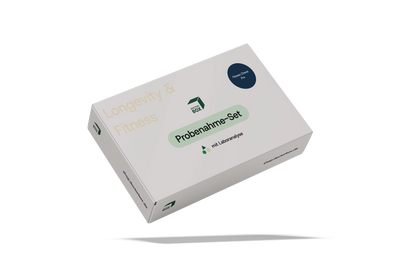
Fitness Check Pro – Your health and performance check for body & heart. The Fitness Check Pro gives you comprehensive insights into your muscle an...
Analyse im Fachlabor
Diskrete Verpackung
Ergebnis in 72h

The comeback as an opportunity

As paradoxical as it sounds: An injury can make you a better athlete in the long run.

Weaknesses discovered: The injury has shown you where your body is vulnerable. Now you know what you need to address.

Patience has been learned: Impatience causes many injuries. The comeback teaches us that sustainable progress takes time. This lesson will stay with you.

Increased body awareness: You now listen to your body better. You recognize warning signals earlier. This protects against future problems.

Technique improved: The break provides time to analyze and improve technique. Many return with cleaner technique.

Appreciation: Health and the ability to move are no longer taken for granted. The enjoyment of training increases.

Building resilience: You've overcome a setback. That makes you mentally stronger. The next obstacle – whether in sports or life – seems less intimidating.

Frequently asked questions about injury comeback

How quickly can I resume training after an injury?

It depends entirely on the injury. Minor muscle strain: days to 2 weeks. Torn cruciate ligament: 9-12 months. Stress fracture: 6-12 weeks. Always seek a medical assessment – ​​subjective feelings are often misleading.

Should I train through the pain?

Mild pain (1-3/10) that doesn't increase during exercise and subsides quickly afterward can be acceptable. Increasing pain, persistent pain, sharp pain – stop. When in doubt: err on the side of caution.

How can I prevent the same injury from recurring?

Root cause analysis: What led to the injury? Eliminate this cause. Preventive exercises for the affected structure. Sensible increase in workload. Sufficient recovery. The injury was a warning signal – listen to it.

I'm afraid of hurting myself again – what should I do?

Normal and common. Gradual build-up fosters confidence. Every successful challenge without problems strengthens that confidence. In cases of severe anxiety: sports psychology can help. Don't ignore it, address it.

When should I see a doctor?

For any injury that doesn't improve significantly within a few days. In cases of severe pain, swelling, instability, or inability to bear weight on the affected body part. If a bone or ligament injury is suspected. When in doubt, always get it checked out.

Can I train other body parts while I'm injured?

Mostly yes, and it's recommended. Arm injury – train legs. Leg injury – upper body. The 'crossover effect' even shows that training the healthy side maintains strength in the injured side.

How can I tell if I'm increasing my workload too quickly?

Pain that worsens during or after training. Swelling that recurs. Worsening the next day. A subjective feeling that 'that was too much'. If you experience these signs: reduce your intensity.

Do I need physiotherapy?

For most significant injuries: Yes. Physiotherapists can objectively assess your progress, adjust exercises, and guide your progression. This is especially important for joint injuries, after surgery, and when there's uncertainty about the recovery process.

How long will it take until I'm back to my old level?

A good rule of thumb: For every week of rest, allow about two weeks for recovery. With longer injuries, it can take months. Frustrating, but the body needs time. Patience pays off – impatience leads to relapses.

Can I return to my previous level after a serious injury?

Mostly yes, sometimes even better. Professional athletes regularly demonstrate that even after cruciate ligament tears, serious fractures, and long periods of absence, a return to top form is possible. It takes time, work, and patience – but it is achievable.
Bereit für den nächsten Schritt?

Du hast jetzt alle wichtigen Informationen. Sorge für deine Gesundheit mit einem zuverlässigen Heimtest.

Fitness Check
DoctorBox AI Advisor
Hey! 👋 What health concerns do you have? I will help you find the right test.

AI-powered – Answers may be inaccurate.

Submit Withdrawal Request

Please fill out the following form to submit your withdrawal request.