Women's strength training: Training with the menstrual cycle
Cycle-based training for optimal results
Your body follows a rhythm. Learn how to use your menstrual cycle for more effective strength training – hard sessions when your body is ready, recovery when it needs it.
Women's strength training: Training with the menstrual cycle
Your body isn't the same every day. Some days you feel invincible. Other days, just getting up feels like a victory.
This isn't due to a lack of discipline. It's due to hormones – and they follow a pattern. The female cycle influences strength, endurance, recovery, and motivation in a predictable way.
Cycle-based training utilizes this knowledge. Instead of working against your body, you train with it. Hard sessions when the body is ready, lighter ones when it needs recovery.
This guide explains the hormonal basics, shows practical training adjustments for each phase of the cycle, and dispels myths that keep women away from strength training.
Understanding the female cycle
The menstrual cycle lasts an average of 28 days, but can vary between 21 and 35 days. It is divided into two main phases, separated by ovulation.
Follicular phase (day 1 to ovulation, approximately days 1-14): Begins with menstruation. Estrogen levels rise slowly. Towards the end of this phase, estrogen reaches its peak. You often feel energetic, motivated, and strong.
Ovulation (around day 14): A brief peak in all hormones. Often the day with peak performance. But also: Increased risk of ligament injury due to estrogen's effects on connective tissue.
Luteal phase (ovulation to menstruation, approximately days 15-28): Progesterone is dominant. Body temperature rises. Many women experience a drop in energy, PMS symptoms, and reduced motivation. The body is preparing for a potential pregnancy.
Premenstrual phase (last days before menstruation): Hormones drop. Often the most difficult time for training – low energy, fluctuating mood, water retention.
Every woman is different. Some barely notice any difference, others notice it significantly. Tracking over several cycles reveals your personal pattern.
Training during the follicular phase
The follicular phase is the time for intense training. Estrogen supports muscle growth and regeneration.
Menstruation (days 1-5): Many women feel tired and unwell during this time. However, hormone levels are at their lowest, similar to men's. If you feel well, you can train as usual. For severe discomfort, opt for lighter workouts or a rest day.
Mid-follicular phase (days 6-10): Energy increases. Estrogen improves pain tolerance and strength. Ideal for progression: heavier weights, higher volume, more intense workouts.
Late follicular phase (days 11-14): Highest estrogen levels. Peak performance is possible. Personal records (PRs) often occur during this time. Use this energy for your toughest workouts.
Training recommendations: Heavy compound exercises, progressive overload, new maximum attempts, higher volume, HIIT training. The body is capable of more – challenge it.
Be careful around ovulation: Estrogen makes ligaments and tendons more elastic. This increases the risk of injury, especially to the cruciate ligaments. Warm up thoroughly, perform controlled movements, and avoid overly explosive jumps.
Training in the luteal phase
The luteal phase requires adjustment. Progesterone slows things down, energy levels drop, and regeneration takes longer.
Early luteal phase (days 15-21): Energy levels are still relatively good. Training can continue as normal, but progressive overload is more difficult. Keep weights steady and work on technique.
Late luteal phase (days 22-28): PMS symptoms are possible. Water retention, breast tenderness, mood swings, fatigue, food cravings. Exercise becomes more difficult.
Adjustments: Less volume, moderate intensity. Instead of new PRs: focus on technique, stability, and mobility. Longer rest periods between sets. Longer recovery time between training sessions.
What works well: steady-state cardio, yoga, light strength training, mobility work. Exercise often helps with PMS symptoms, but don't push yourself to your limits.
Self-compassion: If you're only at 70% today, that's okay. It's biologically based. In a few days, you'll be back at 100%.
Flexibility in the plan: If the training plan includes a tough leg workout but you feel like you're wading through syrup – postpone it. The plan serves you, not the other way around.
Nutrition during the menstrual cycle
Energy requirements also fluctuate with the menstrual cycle. The luteal phase burns more calories – up to 200-300 kcal more per day. These cravings have a biological basis.
Follicular phase: The body uses carbohydrates more efficiently. A good time for carbohydrate-rich meals around training; glycogen is stored better.
Luteal phase: Higher basal metabolic rate, but poorer carbohydrate utilization. Moderate carbohydrates, slightly more protein and fat. Satisfy cravings with nutrient-rich foods instead of ignoring them completely.
Iron: You lose iron during menstruation. Replenish your iron levels with iron-rich foods (meat, legumes, green vegetables) or supplementation if a deficiency has been diagnosed.
Magnesium: Can help with PMS symptoms. Nuts, dark chocolate, leafy greens. Or a supplement.
Hydration: Water retention during the luteal phase is hormonally driven. Paradoxically, drinking more fluids often helps reduce retention. Don't confuse this with weight gain.
Calorie counting during your cycle: When tracking, keep in mind the fluctuations. Weight and hunger levels vary. Use weekly averages instead of a fixed daily target.
Myths about women and strength training
Too many women avoid strength training due to misinformation. Time to clear things up.
Myth: Weight training makes you 'bulky'. Reality: Women have about ten times less testosterone than men. Extreme muscularity requires years of training plus often additional substances. Normal weight training makes you toned and defined, not bulky.
Myth: Women should only train with light weights. Reality: Your body adapts to stress. Always using light weights means no progression. Women can and should train heavy for real results.
Myth: Don't exercise during your period. Reality: Exercising during your period is safe for most people and can even relieve cramps. Listen to your body – if you can, exercise.
Myth: Women need different exercises than men. Reality: The same exercises work for both genders. Squats, deadlifts, bench presses, rows – effective for everyone.
Myth: Cardio is better for women. Reality: Strength training is especially important for women – for bone health, metabolism, body composition, and everyday strength. Cardio is good, but not a replacement.
Special phases of life
Hormonal situations outside the normal cycle require adjustments.
Hormonal contraception: The pill suppresses the natural menstrual cycle. Hormonal fluctuations are reduced and artificially controlled. Cycle-based training is less relevant, but individual reactions to the pill-free interval are possible.
Perimenopause and menopause: Estrogen levels drop permanently. Strength training becomes even more important – for bone health (osteoporosis prevention), muscle mass (which decreases without training), and metabolism. Adaptation: Increased regeneration, focus on bone stress.
Pregnancy: Exercise is usually possible and recommended, but with adjustments. Avoid lying on your stomach, maximum exertion, and exercises with a risk of falling. Consult your doctor or midwife.
Postpartum: Pelvic floor rehabilitation before returning to heavy training. Build up gradually. The body has performed an enormous feat and needs time to recover.
Amenorrhea (absence of menstruation): Often a warning sign. Causes include overtraining, insufficient calorie intake, and excessive stress. Take Relative Energy Deficiency in Sport (RED-S) seriously. Reduce training, increase energy intake, and consult a doctor.
Tracking and self-monitoring
Know your body through systematic tracking.
Cycle tracking: Period apps (Clue, Flo, etc.) document your cycle. After a few months, patterns emerge – when you feel good, when you feel less so.
Training logging: Write down what you train. Strength, energy, motivation. After a few months, correlate this with your cycle. You will see patterns.
Subjective markers: How do you feel today on a scale of 1-10? Sleep quality? Mood? This soft data is valuable.
Objective markers: Weight fluctuates throughout the cycle – up to 2-3 kg due to water retention. Don't get frustrated. Monthly averages are more meaningful.
Heart rate variability (HRV): Wearable devices can measure HRV. Lower HRV in the luteal phase is normal. Some use this for training control.
Adjustment: After 3-6 months of tracking, you'll have enough data for a personalized plan. You'll know which days are strong, which are weak – and you can plan accordingly.
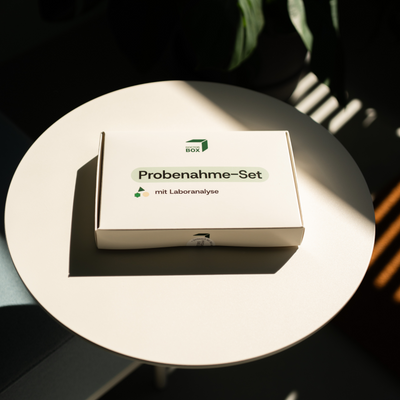
Sicherheit durch Testen
Jetzt wo du die Symptome kennst: Verschaffe dir Klarheit mit einem diskreten Heimtest.
A template for cycle-based training. Adapt it to your individual patterns.
Menstruation (Days 1-5): If you train, do so at a moderate intensity. Compound exercises with medium weights. Or: yoga, walking, light exercise. Listen to your body.
Early follicular phase (days 6-10): Increase intensity. Heavy compound lifts, try progression. 4 times per week is possible. Build up volume.
Late follicular phase (days 11-14): Peak week. Maximum intensity, attempting new PRs, HIIT. Your window for peak performance. But pay attention to warming up and controlled movements.
Early luteal phase (days 15-21): Maintain intensity but do not increase it. Focus on technique and volume. A good week for hypertrophy-oriented training (moderate weights, higher repetitions).
Late luteal phase (days 22-28): Deload or reduced training. 2-3 sessions, moderate intensity. Mobility exercises, active recovery. Be flexible and kind to yourself.
The plan is a template: ultimately, your body dictates. If day 10 feels like day 25 – train like day 25. Tracking helps, but flexibility is essential.
Frequently asked questions about women's strength training
Will I really not get bulky if I lift heavy things?
No. Extreme muscularity in women requires years of dedicated training, often genetic predisposition, and frequently hormonal support. Normal strength training develops a toned, athletic physique—not bodybuilder bulk. The fear of being "bulky" prevents too many women from training effectively.
Can I exercise during my period?
Mostly, yes. Hormones are at their lowest, similar to men. Many women report that exercise relieves cramps. For very severe symptoms: lighter workouts or a break. Not forcing yourself to exercise is also okay.
How long does it take to know my cycle well enough?
3-6 months of consistent tracking. After this time, you'll recognize patterns – when energy is high, when it's low. The investment pays off for years of optimized training.
I take the pill – does cycle-based training still apply?
In its classic form, this is less noticeable because the natural cycle is suppressed. Some women notice differences in the pill-free interval. Individual observation will show whether adjustments are advisable.
How much protein do I need as a woman who exercises?
1.6-2.2g per kg of body weight daily for optimal muscle growth, similar to men. Many women don't eat enough protein. Tracking your intake for a few weeks will show you where you stand.
Why is my weight higher in the week before my period?
Water retention due to progesterone and declining hormone levels. Up to 2-3 kg is normal and disappears after your period starts. It's not fat – don't get frustrated.
Should I eat fewer calories during the luteal phase?
No, actually more. Your basal metabolic rate increases by 100-300 kcal. The cravings have biological reasons. Calorie restriction during this phase can be counterproductive. Eat nutrient-rich foods instead of starving yourself.
Can strength training affect the menstrual cycle?
Overtraining can disrupt the menstrual cycle or lead to amenorrhea (absence of menstruation). Moderate strength training usually has positive effects. If you experience irregular cycles, review your training and diet.
Are certain exercises better suited for women?
The basic exercises work for everyone. Women especially benefit from hip-dominant exercises (hip thrusts, RDLs) for the posterior chain and from upper body work (often neglected). No need for 'women's exercises' – the basics are the basics.
How do I deal with bad days?
Acceptance. Not every day can be a PR. If your body says no – lighter training or a break. In the long run, consistent training over weeks and months wins, not the single heroic session.
Bereit für den nächsten Schritt?
Du hast jetzt alle wichtigen Informationen. Sorge für deine Gesundheit mit einem zuverlässigen Heimtest.