Kettlebell Training: The Complete Guide for Beginners and Advanced Users
Swing, Snatch, Get-Up – explosive strength and endurance with a single device
The kettlebell is one of the most versatile training tools available. With a single kettlebell, you can train strength, endurance, explosiveness, and mobility—in a fraction of the time required for traditional workouts. This comprehensive guide will teach you everything you need to know about the fundamental exercises, proper technique, effective program design, and the most common mistakes to avoid.
The kettlebell is a weighted barbell with a distinctive handle, originating in 18th-century Russian strength training. Unlike conventional barbells, its unique shape allows for ballistic, dynamic movements that combine strength, endurance, and coordination in a single exercise. Over the past two decades, kettlebell training has experienced unprecedented growth, evolving from a niche training method to a mainstream fitness tool.
The fundamental difference between kettlebell and classic dumbbell training lies in the force generation. While dumbbells are primarily designed for controlled, smooth movements, the kettlebell enables explosive, ballistic exercises at high speed. The center of gravity under the handle generates centrifugal forces with every swing, challenging the body in a unique way and requiring tremendous stabilization effort.
Kettlebell training combines strength and endurance training in a way that is difficult to replicate with other equipment. A single kettlebell swing engages almost every muscle in the body, from the calves and posterior chain to the forearms. At the same time, the ballistic nature of the movement elevates the heart rate, creating a metabolic training effect that can surpass traditional cardio training.
The versatility of the kettlebell makes it the ideal training tool for various goals. Athletes use it for speed and explosiveness training, fitness enthusiasts for efficient full-body workouts, and rehabilitation patients for controlled strengthening. With a single kettlebell, you can perform hundreds of different exercises – from gentle mobility exercises to intense metabolic circuits.
The simplicity of the equipment is another advantage. One or two kettlebells take up minimal space, require no maintenance, and are virtually indestructible. You can train in the living room, the garden, or the park. This portability and versatility have made kettlebell training a popular choice for home gyms and people with limited space or budget.
The fundamental kettlebell exercises
Kettlebell training is based on a handful of fundamental movement patterns from which all other exercises are derived. Mastering these basics is essential before moving on to more complex variations. Each of these exercises trains the body holistically and develops specific qualities.
The kettlebell swing is the king of kettlebell exercises and should make up the majority of your workout time. The movement begins from a slightly bent hip position, where you bring the kettlebell back between your legs and then explosively swing it forward with hip extension. The arms remain passive – all the power comes from the hips. The swing trains the posterior chain, develops explosive power, and simultaneously provides an intense conditioning workout.
The Turkish Get-Up is a complex sequence of movements from lying down to standing and back again, while holding a kettlebell with a straight arm overhead. This exercise uniquely develops full-body stability, shoulder strength, and body awareness. A single Get-Up engages nearly every muscle and joint in the body, while simultaneously revealing weaknesses in mobility or stability.
The goblet squat, performed with the kettlebell held in front of the chest, is the safest and most effective squat variation for most people. The counterweight in front of the body allows for a more upright posture and helps to ensure proper knee alignment. For many, the goblet squat is the best introduction to squat training and remains a valuable exercise even for advanced trainees.
The kettlebell clean brings the kettlebell from the floor or with momentum to the rack position on the chest in an explosive movement. This position—kettlebell resting on the forearm, elbow close to the body—is the starting point for many other exercises. The clean develops explosive pulling power and coordination and is more technically demanding than it looks.
The kettlebell press involves pressing the kettlebell overhead from the rack position. Unlike the barbell press, the kettlebell requires additional stabilization work due to its asymmetrical weight distribution. The press develops shoulder and triceps strength as well as core stability and is an excellent indicator of functional upper body strength.
The kettlebell snatch combines elements of the swing and the press in a fluid movement that brings the kettlebell from the floor overhead in one swift motion. Technically, the snatch is the most demanding of the basic exercises, requiring precise timing and technique. It is considered the ultimate kettlebell exercise and is the examination exercise for Russian kettlebell certifications.
Technique and safety in kettlebell training
Proper technique in kettlebell training is not only important for effectiveness, but essential for safety. The ballistic movements and the momentum of the weight can cause serious injuries if performed incorrectly. Invest sufficient time in learning the fundamentals before increasing the weight or complexity.
The hip flexion – the 'hinge' – is the fundamental movement pattern you need to master. Many people confuse the hip flexion with the squat and round their lower back in the process. In a proper hip flexion, the knees remain slightly bent as you push your hips back and lean your torso forward. The lower back remains flat or slightly arched – never rounded.
Breathing during kettlebell training follows a specific pattern. For ballistic exercises like the swing, you exhale sharply during the explosive extension – this 'power breath' increases core tension and power generation. For holding exercises like the press, you use the Valsalva maneuver: inhale, tighten your core, hold the contraction during the exertion, and exhale at the end.
The grip should be firm but not cramped. During swing exercises, the kettlebell should rest in the fingers, not deep in the palm. This prevents excessive blisters and allows for better control. The grip changes dynamically during the movement – looser at the bottom of the swing, tighter at the top.
The rack position requires specific attention. The kettlebell rests on the forearm, not in the hand. The elbow is close to the body, and the forearm is vertical. An incorrect rack position leads to wrist and elbow problems and limits power during the press. Practice the position statically first before adding dynamic cleans.
Overhead positions require special care. The shoulder must be actively engaged – the shoulder blade pulled back and down. A passive hanging motion in the shoulder under load leads to injury. With every overhead exercise, you should consciously activate and stabilize the shoulder.
The kettlebell should be set down in a controlled manner. Never drop the kettlebell or throw it to the ground uncontrollably. From the end position of an exercise, guide it through the swing arc in a controlled manner and then set it down. When fatigued, a controlled set-down is better than a failed attempt.
Training planning and program design
Kettlebell training programs differ from traditional strength training in their focus on movement quality, ballistic exercises, and higher repetitions. Effective programs utilize the unique properties of the kettlebell and avoid the mistake of treating it like a small barbell.
Kettlebell training can be more frequent than traditional weight training. Because many exercises generate less local muscle fatigue but more systemic stress, the muscles recover faster. Three to five training sessions per week are optimal for most people, with intensity and volume adjusted accordingly.
Simple and Sinister is one of the best-known and most effective minimal workout programs. It consists of just two exercises: 100 swings and 10 Turkish get-ups, performed daily or almost daily. This apparent simplicity belies its effectiveness – the program develops strength, endurance, and flexibility simultaneously and is suitable for beginners as well as advanced athletes.
Complex programs combine several exercises in predetermined sequences. A complex like clean, press, squat – performed as a single set without putting the kettlebell down – offers intense metabolic training in a short amount of time. The exercises are performed consecutively without a break, which places high demands on grip strength and endurance.
For strength development, you focus on heavier weights with lower repetitions. The kettlebell press for 3 to 5 repetitions develops maximum strength. For endurance and metabolic conditioning, you use lighter weights with high repetitions or time-based protocols.
Progression in kettlebell training is achieved through various variables: more repetitions with the same weight, shorter rest periods with the same volume, more complex exercise variations, or finally, a heavier weight. Weight increments with kettlebells are often larger than with dumbbells, requiring patience when preparing for the next weight.
Deload weeks should be scheduled every 4 to 6 weeks, especially with a higher training frequency. During a deload week, you reduce volume and intensity by about 40 to 50 percent to allow for complete recovery. Kettlebell training places a high demand on the nervous system, and regular recovery periods are crucial for long-term progress.
Kettlebell training for specific goals
The versatility of the kettlebell allows it to be adapted to almost any training goal. From fat loss to muscle gain to sport-specific preparation – the programming changes, but the tool remains the same. Understanding these adaptations will help you optimize your training to achieve your goals.
High-volume swing protocols are excellent for fat loss and metabolic conditioning. Calorie expenditure during kettlebell training is remarkably high – studies show up to 20 calories per minute during intense swing workouts. Intervals such as 30 seconds of swings, 30 seconds of rest for 15 to 20 rounds combine strength and conditioning training into one efficient package.
For muscle growth, heavier kettlebells and lower repetitions are effective. The goblet squat, press, and row can be programmed with progressively heavier weights for hypertrophy. Double kettlebell training—using two kettlebells simultaneously—allows for heavier loads and is particularly effective for muscle growth. However, expectations should be realistic: kettlebells are optimized for strength and conditioning, not for maximizing muscle mass.
Kettlebell training offers unique advantages for athletic performance. The ballistic nature of the exercises develops explosive power that is directly transferable to athletic movements. Sprinters, martial artists, ball sports players, and other athletes successfully use kettlebells to develop speed and power. The swing is particularly valuable for developing hip explosiveness.
Kettlebells can be used in long training sessions to build endurance and conditioning. The Russian sport of Girevoy uses 10-minute sets with hundreds of repetitions. Even without competitive ambitions, longer snatch or swing sets are excellent endurance training that simultaneously develops strength.
Controlled kettlebell exercises offer benefits for rehabilitation and prevention. The Turkish get-up is an assessment tool that reveals weaknesses in the kinetic chain. Targeted swing variations can strengthen the posterior chain and address back problems. These unique movement patterns complement traditional rehabilitation exercises and can accelerate the return to full function.
Health monitoring for kettlebell athletes
Intensive, holistic kettlebell training places high demands on your body. Regular health monitoring helps you train optimally, avoid overtraining, and stay healthy in the long term. Certain lab values are particularly relevant for kettlebell athletes.
Hormonal balance influences your ability to train and recover. Testosterone is important for strength and regeneration, and chronically high training loads can lower its levels. Cortisol, the stress hormone, rises during intense training and should decrease again with sufficient recovery. Persistently elevated cortisol indicates overtraining.
Inflammatory markers like CRP indicate whether your body can cope with the training load. Slightly elevated levels after intense training blocks are normal, but chronically elevated levels are problematic. Monitoring these levels helps adjust training before overtraining or injury occurs.
Iron status is crucial for energy production and oxygen transport. Intense training increases iron requirements. Ferritin, the storage value for iron, should be at least 50 ng/ml for athletes – lower values can impair performance and recovery, even without obvious anemia.
Vitamin D affects muscle strength, hormone levels, and immune function. A deficiency can reduce strength and increase susceptibility to injury. Since vitamin D is primarily produced through sunlight and many people don't get enough, monitoring is particularly important. A level of at least 40 ng/ml is recommended for athletes.
Thyroid function regulates metabolism and influences energy levels and recovery. In cases of unexplained fatigue or decreased performance despite good training, it's worth checking TSH and free thyroid hormone levels.
Sicherheit durch Testen
Jetzt wo du die Symptome kennst: Verschaffe dir Klarheit mit einem diskreten Heimtest.
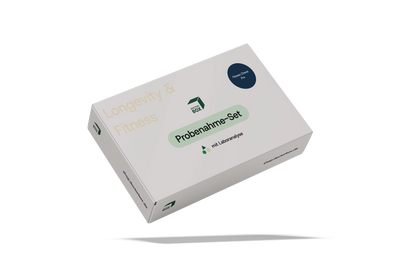
Fitness Check Pro – Your health and performance check for body & heart.
The Fitness Check Pro gives you comprehensive insights into your muscle an...
Analyse im Fachlabor
Diskrete Verpackung
Ergebnis in 72h
Choosing the right kettlebell
Choosing the right kettlebell is crucial for effective and safe training. Weight, shape, material, and quality all influence your training experience. A good kettlebell is a lifetime investment – don't cut corners.
The starting weight depends on your training experience, gender, and goals. For men with strength training experience, 16 kg is a good starting point for most exercises, possibly 12 kg for Turkish get-ups. For women, 8 kg or 12 kg are typical starting weights. Beginners without training experience should start with lighter weights and learn the technique before increasing the weight.
The shape of a kettlebell significantly influences its handling. Competition-style kettlebells are the same size regardless of weight – the higher weight is achieved through denser material. This allows for consistent technique across different weights. Traditional cast-iron kettlebells become larger with increasing weight and can vary in shape depending on the manufacturer.
The handle should be smooth but not slippery. A handle that's too thick makes it difficult to grip, while one that's too thin can cut into your hand. The handle should offer enough space for both hands if you want to perform two-handed swings. Quality kettlebells have precisely milled handles without sharp edges or casting seams.
The material plays a role in durability and feel. Cast iron is the classic choice – robust and long-lasting, but the surface can be rough on cheaper models. Steel kettlebells, often powder-coated, offer more consistent surfaces. Kettlebells with a rubber or vinyl coating are intended for home workouts on delicate floors, but the coating often reduces grip.
Price usually correlates with quality. Cheap kettlebells from discount stores often have rough surfaces, uneven weight distribution, and uncomfortable handles. Quality manufacturers like Rogue, Kettlebell Kings, or Dragon Door produce kettlebells that last for decades and offer a superior training experience. The higher cost pays for itself over the kettlebell's lifespan.
To get started, a single kettlebell of moderate weight is sufficient. As your experience grows, you'll want to build a collection – typically 2 to 3 sizes for different exercises and a pair for double kettlebell work.
Common mistakes in kettlebell training
Kettlebell training is more technically demanding than it looks, and certain mistakes are particularly common. Recognizing and correcting these mistakes significantly improves both the effectiveness and safety of your training.
The most common technique error is performing the swing as a squat instead of a hinge. Many beginners bend their knees too much and move up and down instead of forward and backward. The correct swing is a hip flexion with minimal knee flexion – the power comes from hip extension, not a squat-like movement. Practice the hip flexion without weights first, until the pattern is ingrained.
A rounded back during swinging exercises is dangerous and unfortunately common. The lower back should remain neutral or slightly arched during all kettlebell exercises – never rounded. A rounded back under ballistic load is a recipe for disc injuries. If you can't keep your back neutral, the weight is too heavy.
Excessive arm movement during the swing makes the exercise less effective and puts unnecessary strain on the shoulders. The arms are passive during the swing – they hold the kettlebell but don't pull it up. All the power comes from the explosive hip extension. If you have to actively pull to get the kettlebell to chest height, you're not using enough hip movement or you're using too heavy a weight.
Lack of core engagement at the highest point of the swing reduces effectiveness and can lead to back pain. At the top of the swing, your glutes and abs should be maximally engaged – you should be standing upright like a plank. An overextended back or a bent torso indicates a lack of control.
Increasing weight too quickly before mastering technique leads to ingrained bad habits and injuries. Kettlebell technique requires patience and practice. Master a weight with perfect form before increasing it. Ballistic movements are less forgiving of errors than slow, strength exercises.
Neglecting the Turkish get-up in favor of only swings is a common problem. The get-up is complex and less 'sexy' than explosive swings, but essential for shoulder stability, movement quality, and body awareness. A balanced program includes both exercises to a significant extent.
Kettlebell training for different life stages
The adaptability of kettlebell training makes it suitable for people of all ages and fitness levels. The principles remain the same, but the execution can vary depending on individual needs and limitations. This flexibility explains why kettlebells are popular with both elite athletes and seniors.
For beginners with no training experience, it all starts with the basic movements. The bodyweight hip flexion, the goblet squat with a light kettlebell, and basic stabilization exercises form the foundation. Before you even think about swings, you should master these movements. Light weights and high repetitions allow for motor learning without the risk of overexertion.
Experienced strength athletes can use kettlebells as a supplement to their main training. Swings for the posterior chain, get-ups for shoulder stability, single-arm presses for anti-rotational strength – these exercises address areas that are often neglected in traditional strength training. The kettlebell doesn't replace barbell training, but rather complements it effectively.
For seniors, kettlebell training offers benefits for balance, grip strength, and functional mobility. Light kettlebells and controlled movements—such as the goblet squat or dampened swings—can be safe and effective. A modified version of the Turkish get-up trains the ability to stand up from the floor, a critical everyday skill in old age.
During pregnancy, moderate kettlebell training can be continued with medical clearance, but adjustments are necessary. The growing baby shifts the body's center of gravity and increases stress on the lower back. Exercises like the swing may need to be modified or replaced, while others, such as the goblet squat, are often possible well into pregnancy.
For people with back problems, kettlebell training can be both risky and therapeutic – it all depends on proper form. Swings performed with perfect technique strengthen back muscles and can alleviate discomfort. Swings performed with poor technique can worsen problems. Professional guidance is essential for those with existing back issues.
Advanced Kettlebell Techniques and Exercises
Once the basic exercises have been mastered, a wide range of advanced techniques opens up, offering new challenges and training stimuli. These exercises require a solid foundation and should be introduced gradually to avoid injuries.
The kettlebell snatch is the most demanding of the classic exercises. In one fluid motion, you bring the kettlebell from a swing between your legs directly overhead into the lockout position. The timing of the 'flip' movement, where the kettlebell rotates around your hand, requires precise coordination. The snatch develops maximum explosive power and is a full-body conditioning workout in a single exercise.
Double kettlebell exercises double the demands on strength and coordination. Double swings, cleans, presses, and front squats allow for heavier loads and require bilateral symmetry. The technique must first be mastered with a single kettlebell before progressing to double the workload.
The windmill is a mobility and stability exercise where you bend sideways with a kettlebell held overhead. The exercise develops hip mobility, lateral core stability, and shoulder endurance. It requires good mobility and should initially be practiced without weight or with a light kettlebell.
The bent press is a historical exercise that allows for more weight overhead than the full press. Instead of pressing the weight upwards, you twist and bend beneath the kettlebell while keeping it relatively stationary. The bent press demands exceptional mobility and technique and is a challenging exercise for advanced kettlebell athletes.
Complexes and flows combine several exercises in fluid sequences without putting the kettlebell down. A classic complex like clean, press, squat, windmill demands strength, endurance, and coordination simultaneously. Flows add creative transitions and can become impressive works of art.
Juggling – throwing and catching the kettlebell in the air – is the most spectacular advanced technique. What looks like a circus act develops coordination, reaction time, and grip strength. Start with light kettlebells and simple throws before progressing to more complex rotations.
Häufig gestellte Fragen
The recommendation depends on your previous training experience and gender. Men with strength training experience typically start with 16 kg for swings and 12 kg for Turkish get-ups. Women with training experience usually begin with 8 kg or 12 kg. Untrained beginners should start lighter—perhaps 8 kg for men and 4 to 6 kg for women—to learn the technique. Starting with too heavy a weight leads to compensations and ingrained bad habits. It's better to start with a lighter weight and develop proper technique.
The optimal training frequency depends on your goals and recovery capacity. For most people, 3 to 5 sessions per week are effective. Kettlebell training often allows for higher frequencies than traditional strength training due to less localized muscle fatigue. A program like 'Simple and Sinister' even recommends daily training with moderate volume. Beginners should start with 3 sessions per week and increase the frequency as their recovery progresses. Watch for signs of overtraining, such as persistent fatigue, decreased performance, or sleep problems.
Yes, you can build muscle with kettlebells, but with some limitations compared to traditional weight training. The ballistic nature of many kettlebell exercises is optimized for strength and conditioning, less so for maximum hypertrophy. For muscle growth, you'll focus on heavier kettlebells with lower reps and slower execution in exercises like the goblet squat, press, and row. Double kettlebell training allows for heavier loads. Realistic expectations are important: Kettlebells can deliver impressive physique development, but they can't replace the volume and isolation of dedicated bodybuilding equipment.
Kettlebell training can be both excellent and risky for your back – it all depends on the technique. Correctly executed swings strengthen the posterior chain, improve hip mobility, and can reduce back pain. Studies show positive effects of swing training on chronic back problems. However, incorrect technique – especially a rounded back during ballistic movements – poses a significant risk of injury. If you have existing back problems, you should work with a qualified trainer and perfect your technique before increasing the load.
Kettlebells and dumbbells are different tools for different purposes. Kettlebells are ideal for ballistic, dynamic exercises, full-body conditioning, and functional movements. Their asymmetrical weight distribution requires more stabilization. Dumbbells are better for isolated muscle work, controlled movements, and progressive overload with small weight increments. Dumbbells have advantages for hypertrophy and traditional strength training. Kettlebells excel for explosive power, conditioning, and time-efficient training. Ideally, you should use both tools depending on your training goal.
Blisters are common for kettlebell beginners, but largely avoidable with proper technique. The most frequent mistake is holding the kettlebell too deep in the palm instead of in the fingers. During swinging exercises, the kettlebell should rest at the base of the fingers and be able to roll easily in the hand during the swing. Over-gripping causes friction and blisters. Chalk helps, but it doesn't correct poor technique. Existing calluses should be kept thin and not picked at. Your hands will adapt over time—give them time to adjust.
For most fitness goals, kettlebell training can work on its own, but it doesn't replace all the benefits of barbell training. Kettlebells are excellent for general fitness, conditioning, explosive power, and time-efficient workouts. For maximum strength and muscle development—especially in the lower body—barbell exercises like squats and deadlifts offer advantages through heavier loads and more precise progression. Many athletes combine both tools: barbells for foundational strength, and kettlebells for conditioning and assistance work. For home workouts with limited equipment, kettlebells are an excellent, space-saving solution.
The main difference lies in the final height of the movement. In the Russian swing, the kettlebell ends at chest or eye level with a strong hip snap. In the American swing, the kettlebell goes overhead until the arm is fully extended. The Russian swing is considered safer and more technically correct – it maximizes hip power and minimizes shoulder stress. The American swing increases the range of motion, but often at the expense of technique, with an active arm pull and increased risk of shoulder injury. For most training goals, and especially for beginners, the Russian swing is the recommended variation.
A qualified coach is highly recommended, especially for beginners. Kettlebell technique looks easier than it is, and mistakes are riskier in ballistic exercises than in slow strength training. A good coach can correct movement patterns before they become ingrained and establish the correct hip flexion technique from the start. At least one introductory session with personalized feedback is invaluable. After learning the basics, independent training with occasional technique checks is possible. Online resources can complement in-person training but cannot completely replace it.
Increasing weight with kettlebells requires more patience than with dumbbells, as the typical increments are larger – usually 4 kg with competition kettlebells or 4 to 8 kg with cast iron. Progression initially involves more repetitions, more sets, or shorter rest periods with the current weight. Only when you have mastered a weight – for example, 10 flawless Turkish get-ups without struggling – do you move on to the next weight. When increasing the weight, you first reduce the repetitions and then gradually increase them again with the new weight. This controlled progression prevents technique deterioration and injuries.
Bereit für den nächsten Schritt?
Du hast jetzt alle wichtigen Informationen. Sorge für deine Gesundheit mit einem zuverlässigen Heimtest.