Skip to content

Präzisions- & Einzelsport

Golf – The sport for a lifetime

Technique, tactics and mental strength on the green

Golf combines physical precision, mental challenge, and social experience like almost no other sport. From obtaining your handicap to your first birdie – this guide will accompany you on your journey.

In short, explained

  • Goal: To get the ball into the hole with as few strokes as possible.
  • Course: 18 holes, various par values ​​and obstacles
  • Handicap: A system for fair competition across all skill levels
  • Entry level: Course readiness achievable in 4-8 weeks
  • Fitness: 8-12 km walking, rotation, coordination, balance
  • Mentally: Focus, patience, and how to deal with mistakes are crucial.

Golf – More than a game, a lifelong companion

Golf is a sport of contradictions: at first glance, it seems simple – hit a ball into a hole with as few strokes as possible. In practice, golf is one of the most technically and mentally demanding sports. This complexity is simultaneously its greatest source of frustration and its deepest fascination. People who have once been bitten by the golf bug often stay with it for life.

The history of golf stretches back over 500 years. The Scottish links courses along the coast were the first playing fields, and the Royal and Ancient Golf Club of St Andrews is still considered the cradle of the sport. From the windswept shores of Scotland, golf has spread across the globe, with a diverse range of courses from desert resorts to mountain courses, from tropical islands to urban settings.

The unique appeal of golf lies in its complexity. Every shot is different: wind conditions, slopes, obstacles, the ball's position – everything influences the decision and execution. Unlike most sports, you're not playing against a direct opponent, but against the course and yourself. This introspective quality makes golf a meditative experience – and a merciless reflection of your mental state.

Golf technique is notoriously difficult to master. The golf swing is a complex kinetic chain requiring the precise coordination of countless body parts. A few millimeters of deviation at impact can send the ball 50 meters in the wrong direction. This demand for precision and repeatability makes golf a continuous learning process, even for professionals with decades of experience.

At the same time, golf is one of the most inclusive sports. The handicap system allows players of varying skill levels to compete fairly against each other. A beginner can enjoy an exciting round with an experienced player if the handicaps are calculated correctly. This democratization of competition is unique and makes golf the ideal sport for families, groups of friends, and business relationships.
The basics of the game

A golf course typically consists of 18 holes, each with a teeing area, a fairway, hazards (bunkers, water, rough), and a green with the flag in the hole. Distances vary considerably: short par-3 holes measure 100-200 meters, while long par-5 holes can exceed 500 meters. The landscape, vegetation, and hazards make each course unique.

The goal is simple: get the ball from the tee into the hole with as few strokes as possible. The 'par' number of a hole indicates how many strokes a scratch golfer (handicap 0) theoretically needs. A par 4 should be played in four strokes: tee shot, approach shot, two putts. If you manage it in fewer strokes, it's a birdie (one under par), eagle (two under par), or even albatross (three under par). If you need more, it's called a bogey (one over par), double bogey, and so on.

Club selection is part of the strategy. A golfer may have a maximum of 14 clubs in their bag: drivers for long drives, woods for long shots from the fairway, irons for various distances and situations, wedges for short shots and bunker shots, and the putter for the green. Each club has a different loft (angle of the clubface) that affects the trajectory: a driver flies low and far, a wedge steeply and short.

Scoring in golf works subtractively: You add up the strokes for all holes and subtract your handicap for the net score. The handicap is a number that expresses your average playing strength over par. A handicap 18 player needs an average of 90 strokes for 18 holes (par 72 + 18). In a match against a handicap 10 player, they receive an 8-stroke handicap – this makes the game fair.

Etiquette is more important in golf than in most sports. You move quietly while others are playing. You repair pitch marks on the green and divots on the fairway. You rake bunkers after your shot. You respect the order of play (the ball furthest from the hole plays first). These rules aren't just tradition – they protect the course and ensure a pleasant atmosphere for everyone.

The golf swing – technique and basics

The golf swing is one of the most complex movements in sports. A rotation around the body's axis, the arms as levers, the wrist as a hinge, the club as an extension – everything must be precisely coordinated in milliseconds to strike the ball cleanly. The good news: Even an imperfect swing can make golf playable. The bad news: A truly consistent swing requires years of practice.

The address position (setup) is the foundation. You stand with your feet shoulder-width apart, knees slightly bent, and your upper body leaning forward from the hips. Your arms hang relaxed, and your hands grip the club. The ball position varies: centered for short irons, slightly left of center for long irons, and level with your left heel for the driver. A correct setup allows for an efficient swing; an incorrect setup requires adjustments.

The backswing brings the club up and back. The shoulders rotate approximately 90 degrees, while the hips rotate less – this tension (X-factor) stores energy. The arms remain relatively straight, and the weight shifts to the back leg. At the top of the swing, the shaft ideally points parallel to the target line. A good backswing is controlled and repeatable.

The downswing releases the stored energy. It begins with a weight shift onto the front leg and a hip rotation. The arms follow, the wrist released just before impact. Ideally, the clubface strikes the ball from inside to outside-front (for a draw) or directly on the target line. The point of impact is the moment of truth – this is where the direction and distance are determined.

The finish reveals the quality of the swing. A balanced finish, with weight on the front foot, hands high above the shoulders, and body turned toward the target, indicates an efficient swing. Many amateurs neglect the finish, but consciously holding the pose often improves the entire swing.

The short game – chipping, pitching, putting – requires different techniques. It's about feel and control rather than distance. The chip is a short, low shot with little swing; the pitch flies higher with more spin; the putt rolls on the green. Statistically, the short game determines the score – the best players are masters both on and around the green.

Mental strength and psychology in golf

Golf is 90 percent mental – this oft-quoted saying holds a lot of truth. You have minutes between shots to think, and this thinking can become your biggest enemy. The ability to stay focused, let go of mistakes, and perform under pressure is what separates good players from mediocre ones – often more than technique.

The challenge begins with the nature of the game: You have 4-5 hours for 18 holes, but you only actually swing the club for about 3-4 minutes of that time. The rest of the time you're walking, waiting, observing – and thinking. Negative thoughts can take hold: 'What if I hit the water again?' 'What if my drive flies to the right?' These thoughts sabotage your swing before you even execute it.

Routines help keep your mind calm. A pre-shot routine—a sequence of actions before each shot—creates consistency and focus. You analyze the shot, select the club, position yourself behind the ball, visualize the trajectory, get into address position, glance at the target one last time, and then hit. This routine is identical for every shot, whether on the driving range or on the 18th hole of a tournament.

Letting go of mistakes is crucial. A bad shot has happened – frustration won't change it. The best players have short memories: they briefly analyze the mistake, learn from it, and then focus entirely on the next shot. Amateurs tend to carry bad shots with them – and the frustration negatively impacts their subsequent shots.

High-pressure situations reveal mental strength. The tee shot on the first hole, with other players' eyes on you. The short putt for birdie that could save the round. The approach shot over water where no mistakes are allowed. In these moments, the mental wheat is separated from the chaff. Techniques like deep breathing, positive self-talk, and focusing on the process (rather than the result) help to manage pressure.

Professional golfers work with sports psychologists, and amateurs can also benefit from mental training. Books, courses, or coaching on the psychology of golf can improve your game more than a new club or a new swing technique.

Physical requirements and fitness for golf

Golf is often underestimated in terms of its physical demands. You walk 8-12 kilometers during an 18-hole round, the golf swing generates enormous torque on the spine, and maintaining concentration for 4-5 hours requires mental energy. Good physical condition not only improves performance but also protects against injuries.

Flexibility is crucial for an efficient swing. Restrictions in hip, shoulder, or thoracic spine rotation force compensatory movements that cost consistency and distance. Regular stretching and mobility exercises—especially for the hips and thoracic region—should be part of a golfer's routine. Many amateurs neglect this aspect and wonder why their swing doesn't improve despite practice.

Core stability is the center of swing power. The abdominal, back, and lateral muscles transfer the rotational energy to the club. A weak core leads to power loss and increases the risk of lower back injuries. Exercises like planks, Russian twists, and medicine ball rotation throws strengthen the core specifically for golf.

The power in your legs and hips drives the downswing. The best swings begin with an explosive hip rotation, propelled by the stable back leg. Squats, lunges, and hip hinges improve this foundation. Strength training doesn't have to be heavy and complex—functional exercises using your own body weight or light weights are sufficient.

Endurance affects consistency over 18 holes. If you get tired on the last few holes, your concentration and technique suffer. Cardio training – walking, jogging, cycling – improves your basic endurance. It doesn't have to be intense: regular brisk walking (like when playing golf) is sufficient.

Balance and equilibrium are essential for a clean swing. You rotate on a relatively small base and must remain stable throughout the entire swing. Single-leg exercises, balance board training, and yoga improve proprioceptive control, which is important for golf.

Health, injury prevention and laboratory values

Golf is a relatively safe sport, but not without risk of injury. The repetitive nature of the swing and the high torque involved can lead to overuse injuries if technique is poor or fitness is insufficient. Being mindful of your body and taking preventative measures will keep you on the course in the long run.

Back pain is the most common problem among golfers. The asymmetrical rotation of the spine under load puts particular strain on the lower back. Herniated discs, facet joint irritation, and muscle strains are common. Prevention includes a proper warm-up before the game, core strengthening, flexibility exercises, and a swing technique that doesn't overstress the back. If back pain occurs, you should analyze the cause – often, a technique correction is necessary.

Shoulder and elbow problems arise from the strain of the swing and grip. Golfer's elbow (medial epicondylitis) is an inflammation of the tendons on the inside of the elbow; tennis elbow (lateral epicondylitis) on the outside. Both result from overuse, often exacerbated by an overly tight grip or poor technique. Forearm strengthening, grip pressure control, and technique work can help prevent these conditions.

Wrist injuries are particularly common when the racket hits the ground before the ball (a fat shot). This can hyperextend or compress the wrist. Good technique, ensuring the racket strikes the ball first, is the best prevention. For existing wrist problems, special braces or adjusted racket lengths can help.

Sun protection is an often overlooked aspect of health. Golfers spend hours in the sun, and the risk of skin cancer is increased. Sunscreen (high SPF), headwear, and long-sleeved clothing with UV protection should be standard practice. Regular skin checks by a dermatologist are advisable for frequent golfers.

For ambitious golfers, regular checkups of their general health are worthwhile. A comprehensive fitness assessment can reveal signs of overexertion, nutritional deficiencies, or the need for adjustments. Such checkups are particularly valuable during intensive training and competition stress, ensuring long-term health and performance.

Sicherheit durch Testen

Jetzt wo du die Symptome kennst: Verschaffe dir Klarheit mit einem diskreten Heimtest.

For the fitness check

Empfohlener Heimtest

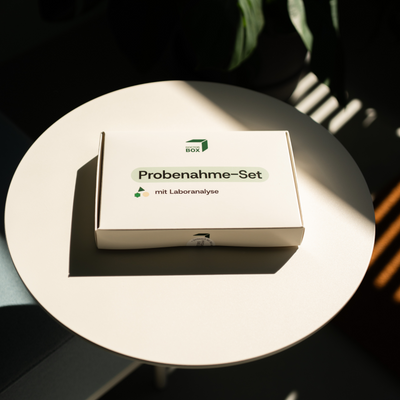
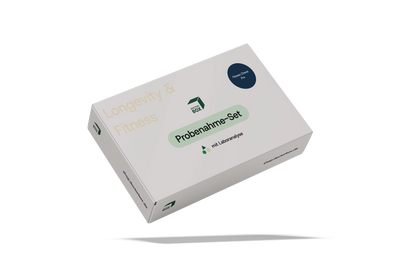
Fitness Check Pro

Fitness Check Pro

Fitness Check Pro – Your health and performance check for body & heart. The Fitness Check Pro gives you comprehensive insights into your muscle an...
Analyse im Fachlabor
Diskrete Verpackung
Ergebnis in 72h

Equipment and gear

Golf requires more equipment than most sports, and the variety can be overwhelming for beginners. From clubs and balls to shoes and clothing, the right equipment makes the game more enjoyable and can improve performance. But beware: expensive equipment is no substitute for practice and technique.

Club selection is the heart of your equipment. A complete set (up to 14 clubs allowed) typically includes: a driver for the tee shot, fairway woods for long shots, hybrids as alternatives to long irons, irons (usually 5-9 or 6-PW), wedges (pitching wedge, sand wedge, possibly gap and lob wedges), and a putter. For beginners, a half set is sufficient: a driver or 3-wood, a hybrid, 7- and 9-iron, a sand wedge, and a putter.

Proper club fitting can make a big difference. Shaft flex, length, lie angle, and grip size should all be suited to your height, swing speed, and technique. Standard clubs are built for the average golfer—if your needs differ, you'll benefit from custom-fitted clubs. Many retailers offer free or low-cost fittings.

Golf balls differ in construction and playing characteristics. Multi-piece balls (premium balls) offer more spin and control, but are more expensive and less forgiving of mistakes. Two-piece balls (distance balls) fly farther and roll straighter, but offer less feel. For beginners, inexpensive, lost, or used balls are sufficient—you'll lose many. As your skill improves, investing in better balls becomes worthwhile.

Golf shoes offer stability and grip on various surfaces. Modern shoes often have spikeless soles, which are comfortable even on hard surfaces. Traditional spikes provide more traction on wet grass. Waterproofing is important in rainy regions. Fit and comfort are crucial – you'll be walking many kilometers.

Gloves improve grip and protect the dominant hand from blisters. Most right-handed golfers wear their glove on their left hand. Material (leather offers the best feel, synthetics more durability) and fit (snug but not constricting) are personal preferences. Some golfers play without gloves – permitted, but unusual.

The path to course qualification and club life

In Germany, the golf course proficiency certificate (also PE – Platzerlaubnis) is the entry ticket to golf. It certifies that you know the basic rules, have mastered fundamental techniques, and can play safely on the course. The path to this certificate involves a course that typically comprises 5-10 hours of instruction.

The golf course qualification course teaches rules, etiquette, safety, and basic technique. You'll learn what you're allowed and required to do on the course, how to behave when others are playing, how to maintain the course, and how to act safely (not endangering anyone). The practical part covers basic strokes: tee shots, iron shots, chipping, and putting. At the end, there's an exam – usually a written test and a supervised round of golf.

The cost of a golf course qualification course varies considerably: from around €150 at municipal practice facilities to several hundred euros at clubs with comprehensive instruction. Some clubs offer package deals that combine the course with a trial membership. The investment is worthwhile – a good course lays the foundation for further progress.

After obtaining your golf course qualification, you'll receive a handicap. In Germany, you start with a handicap of 54, the highest standard value. You can improve your handicap by participating in tournaments and achieving good results. A lower handicap opens doors: many courses have handicap limits, allowing you to participate in more challenging tournaments.

Club membership is the classic way to play golf regularly. The advantages include free or discounted access to your home course, participation in club tournaments and events, a social network, and handicap management by the club. Costs vary enormously: from a few hundred euros at urban or simpler clubs to five-figure sums at exclusive facilities. Distance memberships offer handicap management without playing rights at the club's course – a good option for golfers who want the flexibility to play different courses.

Green fee players can use courses without a membership for a daily fee. The green fee varies depending on the course and season – from €30 on basic courses to several hundred euros on prestigious facilities. For casual players, this can be cheaper than a membership.

Training and improvement

Golf is a lifelong learning process. Even professionals with decades of experience continuously work on their technique. For amateurs, structured training is key to making progress and avoiding frustration. Time spent on the driving range is often more valuable than time spent on the course.

Lessons with a professional are essential for serious improvement. Video analysis, personalized drills, and professional feedback significantly accelerate the learning process. Even just a few hours with a qualified instructor can correct years of bad habits. The investment is worthwhile – good instruction ultimately saves time and frustration.

The driving range is your practice lab. But: Simply hitting balls is inefficient. Practice with purpose: Set goals for each session, work on specific aspects (practice fades, distance control, strong hand control), and vary your clubs. Quality beats quantity – 50 focused shots are more effective than 200 mechanical hits.

The short game deserves disproportionate attention. Statistics show that approximately 60 percent of shots are taken within 100 meters of the green. Putting, chipping, and pitching on the practice green improve your score faster than long drives. Many amateurs neglect this area—and consequently lose valuable strokes.

Playing on the course is essential. The driving range only partially simulates reality: the pressure of a real shot, decision-making in varying lies, and reading greens. Regular rounds, whether alone or in small groups, solidify technique under realistic conditions.

Technology can support training. Launch monitors measure swing data such as clubhead speed, ball speed, and spin. Apps track your statistics over many rounds. Video analysis allows for self-feedback. These tools are not a replacement for lessons, but valuable additions for self-analysis.

Your introduction to golf – practical tips

Getting started in golf is easier than many people think. You don't need a lot of money, your own equipment, or any prior knowledge. With a few practical steps, you'll quickly be on your way to achieving your handicap and playing your first round on a real course.

Start with a trial lesson. Many clubs and practice facilities offer affordable introductory sessions where you can borrow clubs and take your first swings under instruction. This will give you a feel for whether golf is for you, without a large investment.

Sign up for a golf course qualification course if you enjoyed the taster session. Choose a provider with good reviews and whose times fit your schedule. Group courses are cheaper and offer social interaction; private lessons are more intensive and faster-paced. Most courses last a few weeks with weekly sessions.

Don't invest in expensive equipment too early. You'll usually be provided with loaner clubs for the golf course certification course. After obtaining your certification, a used or inexpensive beginner set will be perfectly adequate. Your swing will change significantly in the first few months – expensive clubs tailored to your current swing will then be outdated. Only invest once your game is more consistent.

Find playing partners at your level. It's more fun and speeds up your learning. Club memberships offer beginner tournaments and groups; online platforms and apps connect golfers. Don't be afraid to play with more experienced players too – most are helpful and happy to welcome newcomers.

Be patient with yourself. Golf is difficult. You'll have terrible rounds, lose balls, and go through frustrating phases. That's normal—even professionals have bad days. The appeal lies in the process: every small improvement, every good shot, every new understanding is a success. Enjoy the journey, not just the destination.

Häufig gestellte Fragen

Golf can be expensive, but it doesn't have to be. A golf handicap certificate costs around €150-400, used beginner sets are available from €100-200, and green fees at basic courses range from €30-50. Club memberships vary considerably – from a few hundred euros at city clubs to five-figure sums at prestigious facilities. For occasional golfers (10-20 rounds per year), playing with green fees can be cheaper than a membership. Compare different options and choose what suits your budget and how often you play.

You can achieve your golf course certification in 4-8 weeks. After that, the real journey begins: For a consistent, enjoyable game (handicap around 30), you typically need one to two years of regular practice and match experience. A single-digit handicap (very good amateurs) requires years of intensive training and isn't attainable for everyone. The good news: Golf is fun at every stage, and you never stop learning. Even after decades, there's still room for improvement.

Absolutely. Golf is one of the few sports you can play from childhood well into old age. Many people only start in their 40s, 50s, or later and develop a real passion. The handicap system evens out differences, allowing generations to play together. The physical demands are moderate and adaptable—older players often use carts and shorter tees. The combination of exercise in the fresh air, mental challenge, and social interaction makes golf the ideal lifelong sport.

The handicap is a number that expresses your average playing strength over par. A handicap of 18 means you need an average of 18 more strokes than par. In competitive play, you subtract your handicap from your gross score to get your net score – this allows players of different skill levels to compete fairly. The handicap starts at 54 and improves with good tournament results. The calculation is complex (slope, course rating), but modern software does it automatically. Your club or association manages your handicap.

Yes, in Germany. Unlike in some countries where anyone can play, in Germany, a golf proficiency certificate (Platzreife) is required to play on official courses. The exam ensures that you know the rules, act safely, and don't disrupt the flow of play. Some practice facilities and short courses allow play without a certificate, but you need it for real golf on 18-hole courses. The investment (time and money) is manageable and lays an important foundation.

Visit several clubs in your area before making a decision. Pay attention to: the condition of the courts and their accessibility, the quality of training offered, the atmosphere and age range of the members, the event calendar and tournament offerings, and the costs (joining fee, annual dues, hidden costs). Many clubs offer trial memberships or trial days – take advantage of these. The 'right' choice is personal: some like traditional, formal clubs; others prefer a more relaxed, younger atmosphere. Trust your gut feeling.

Dress codes vary from club to club, but basic rules apply almost everywhere: no jeans, no sleeveless shirts for men, and no flip-flops. Classic attire includes a polo shirt or collared shirt, dress trousers or golf shorts (knee-length), and golf shoes. Women have more leeway, but similar basic principles apply. Modern golf clothing is functional (breathable, allows for freedom of movement) and stylish. Check the specific dress code of the club before your first visit – some are stricter than others.

The tee shot with the driver is the most difficult shot for many. Tips: Practice not only on the driving range, but also at address without a ball. Experiment with tee height – about half a ball above the top of the driver. Rhythm is more important than power – a smooth, controlled swing beats a tense, power swing. Take lessons to correct fundamental errors. And: Accept that not every tee shot will be perfect. Consistency comes from thousands of repetitions.

Long irons (3s, 4s, 5s) are difficult to play because they have little loft and require precise contact. Hybrids (also called rescue clubs) combine the characteristics of woods and irons: their lower center of gravity and larger face make contact more forgiving, while still covering similar distances to their corresponding iron counterparts. Most amateurs play better with hybrids than with long irons. Many sets replace their long irons entirely with hybrids.

Yes, but there are limitations. Many courses allow solo players if there's capacity, but they assign them to other groups. Solo golf is easier during quieter times (early mornings, weekdays). The advantages: You play at your own pace, can repeat shots, and focus entirely on your own game. The disadvantages: Less social, no opportunity for comparison, and some clubs require a minimum group size. Tournament results for handicap improvement usually require a playing partner to keep score.

Bereit für den nächsten Schritt?

Du hast jetzt alle wichtigen Informationen. Sorge für deine Gesundheit mit einem zuverlässigen Heimtest.

For the fitness check
DoctorBox AI Advisor
Hey! 👋 What health concerns do you have? I will help you find the right test.

AI-powered – Answers may be inaccurate.

Submit Withdrawal Request

Please fill out the following form to submit your withdrawal request.