
Skip to content

Fitness & Kraftsport

Functional Training – Fitness that works in life

Movement patterns, exercises and principles for holistic fitness

Functional training develops a body that not only looks strong but also functions strongly. Through natural movement patterns and holistic training, you improve strength, coordination, balance, and endurance – skills that directly transfer to everyday life and sports.

In short, explained

  • Principle: Train movements, not isolated muscles.
  • Basic patterns: Squat, Hinge, Push, Pull, Carry, Rotation
  • Equipment: Kettlebells, free weights, body weight, resistance bands
  • Benefits: Transfer to everyday life, improved posture, injury prevention
  • Frequency: 3-4 times per week with sufficient rest
  • Getting started: Learn basic movements, then gradually increase the difficulty.

Functional training – movement that has a purpose

Functional training has fundamentally changed the fitness industry in recent years. It has moved away from isolated machine exercises that target individual muscles and towards complex movement patterns that engage the entire body in a coordinated manner. The underlying idea is as simple as it is compelling: train movements, not muscles. The result is fitness that makes a noticeable difference in real life – whether carrying groceries, playing with children, or exercising.

The term 'functional' describes training that serves a purpose – in contrast to purely aesthetic training, which aims at muscle growth. A functionally trained body is not only strong, but also flexible, coordinated, and resilient. It can move in all three planes of space, react to unexpected situations, and transfer force without sustaining injury.

The roots of functional training lie in rehabilitation and athletic performance preparation. Physiotherapists recognized that isolated exercises are often insufficient to make patients functional in everyday life. Sports coaches understood that machine training does not automatically improve performance on the field. From these insights, a training approach developed that views and trains the body as an integrated system.

At its core, functional training is about movement patterns that correspond to human biomechanics. Pushing, pulling, lifting, carrying, rotating, walking, running, jumping – these basic movements can be performed by any healthy person, and they form the basis of functional training. Instead of isolating the biceps with curls, you train pulling movements like rowing or pull-ups, where the biceps work together with the back, shoulders, and core.

The equipment used in functional training differs from that in traditional gyms. Instead of guided machines, you'll find free weights, kettlebells, medicine balls, straps, resistance bands, and bodyweight stations. These tools demand not only strength but also stability and coordination – you have to control the movement yourself, rather than following a machine. This instability isn't a disadvantage, but rather the key to transferring the training to real-life situations.
The principles of functional training

Functional training is based on fundamental principles that distinguish it from isolated machine training. Understanding these principles will help you design effective training sessions and maximize their benefits in everyday life.

The first principle is multidimensionality. The human body moves in three planes: sagittal (forward and backward), frontal (sideways), and transverse (rotating). Most machines restrict you to one plane, typically the sagittal one. Functional training integrates all three planes—you rotate, flex, and extend simultaneously, just like in real-life movements. A lumberjack swing combines rotation, flexion, and extension; a Turkish get-up goes through all three planes.

The second principle is whole-body integration. Isolated exercises train muscles, but not the coordination between muscle groups. When lifting an object, legs, core, back, and arms work together – if one of these areas is weak or uncoordinated, the entire movement suffers. Functional training strengthens the chains, not just the individual links.

The third principle is core stability. The torso is the center through which all power is transmitted. A strong, stable core connects the upper and lower body and enables powerful, controlled movements. In functional training, core work is not isolated abdominal muscle training, but an integral part of every exercise. Planks, Pallof presses, and asymmetrical loads train the core more functionally than classic sit-ups.

The fourth principle is the proprioceptive challenge. Proprioception is the ability to sense the body's position in space. Stable machines eliminate this requirement; functional exercises challenge it. Single-leg exercises, unstable surfaces, or asymmetrical loads force your nervous system to constantly correct and stabilize. This improves balance and reaction time.

The fifth principle is carryover. The ultimate goal isn't to get better at training, but to get better at life or sport. Every exercise should have a recognizable carryover to real-world demands. If your goal is to lift heavy objects, you train deadlifts—not leg extensions. If you're training for contact sports, you incorporate explosive rotations and reactive movements.

Basic movement patterns

Human movement can be reduced to a manageable number of fundamental patterns. These patterns form the basis of functional training and should be included in any well-rounded program. Each pattern can be trained with various exercises and intensities.

The squat is one of the most fundamental human movements. You bend your hips, knees, and ankles to lower yourself and extend them to stand up. Variations include two-legged squats (goblet squat, front squat, back squat), single-legged variations (split squat, Bulgarian split squat, pistol squat), and explosive forms (jump squat). This movement works the quadriceps, glutes, hamstrings, and core.

The hip hinge pattern describes a flexion primarily originating from the hips with relatively straight knees. The classic example is the deadlift: you lift a weight from the floor by extending your hips. Other variations include the Romanian deadlift, kettlebell swings, and good mornings. This pattern trains the entire posterior chain – hamstrings, glutes, and erector spinae.

Pushing movements can be divided into horizontal (bench press, push-ups) and vertical (shoulder press, handstand push-ups). They train the chest, front deltoids, and triceps. Functional variations such as one-arm presses additionally challenge core stability.

Pull movements are the counterpart to pushing movements and can also be performed horizontally (rowing) or vertically (pull-ups, lat pulldowns). They train the entire back, the rear deltoids, and the biceps. For balanced development and shoulder stability, the pulling volume should be at least equal to the pushing volume, ideally even higher.

Carrying and walking under load (loaded carry) is an often overlooked but highly functional pattern. Farmer's walks, suitcase carries, and overhead carries train grip strength, core stability, and overall body power while providing movement. These exercises are simple but brutally effective for functional fitness.

Rotation is the most neglected movement pattern in traditional training. Exercises like the lumberjack press, Pallof press, and medicine ball throws train the oblique abdominal muscles and the ability to transfer power through the core. Many everyday movements and sports involve rotation—without training this pattern, a crucial element is missing.

Equipment in functional training

Functional training utilizes a variety of training equipment that differs from the machines found in conventional gyms. Most of these tools are relatively simple but require active control from the trainee. This section provides an overview of the most important equipment and its applications.

Kettlebells are spherical weights with a handle, originating in Russian strength training. Their shape allows for unique swinging and ballistic movements such as the kettlebell swing, the Turkish get-up, and the snatch. The asymmetrical weight distribution requires additional stabilization. Kettlebells are versatile, space-saving, and enable strength, endurance, and mobility training in one.

Free barbells and dumbbells are classic tools used in functional training for basic exercises such as squats, deadlifts, presses, and rows. Unlike machines, they require active stabilization and allow for natural movement patterns. Dumbbells offer the additional advantage of training each side independently and addressing asymmetries.

Suspension trainers (TRX and similar) use your own body weight against gravity. By changing your body angle, you can adjust the intensity continuously. The instability of the straps demands constant core activation. Suspension trainers are portable and allow for effective training anywhere – ideal for travel or home workouts.

Medicine balls are versatile and can be used for throws, slams, and dynamic exercises. They allow for explosive movements with resistance and train power at high speeds. Medicine ball throws and slams are cathartic, effective, and fun.

Resistance bands offer variable resistance: the more you stretch the band, the harder it becomes. They are ideal for warm-up and activation exercises, rehabilitation, and as resistance in exercises where gravity isn't optimal (e.g., horizontal pulling). They are also useful for assisting with challenging bodyweight exercises like pull-ups.

Plyo boxes, battle ropes, punching bags, and slam balls are other tools found in functional studios. Each has specific uses and expands the exercise repertoire. A well-equipped functional studio doesn't need a lot of space or expensive machines—but a thoughtful selection of versatile tools.

Physical demands and training effects

Functional training develops a broad base of physical abilities, rather than maximizing individual qualities. The result is general fitness that proves its worth in various contexts – a body ready for whatever life throws at it.

In functional training, strength is developed holistically. Instead of isolated muscle strength, the focus is on the ability to generate and transfer force through complex movements. You might not have the strongest biceps, but you'll be able to lift, carry, and put down a heavy object without ruining your back. This 'usable' strength is the goal.

Core stability is a key training effect. The torso is not only trained through isolated abdominal exercises, but also through the constant requirement to remain stable during all exercises. Planks and their variations, asymmetrical loads, and anti-rotation exercises develop a core that functions as a power-transmitting center, not just as an aesthetic six-pack.

Balance and coordination improve through the proprioceptive demands of functional training. Single-leg exercises, unstable surfaces, and complex movement patterns challenge your nervous system to precisely control your body. These skills are particularly relevant for fall prevention in old age and athletic performance.

Mobility is often neglected, but it's integrated into functional training. Deep squats, overhead positions, and lunges require and develop mobility in the hips, ankles, shoulders, and thoracic spine. Training through full range of motion is more functional than restricted movements.

Endurance – both cardiovascular and muscular – can be trained through appropriate program design. Circuit training, HIIT formats, and combinations of strength and cardio elements challenge the cardiovascular system, while longer sets and shorter rest periods develop muscular endurance.

The specific training effects depend heavily on the program design. Functional training is not a fixed protocol, but a framework that can be adapted for various goals: strength building, fat loss, sport-specific preparation, or general health.

Health benefits and lab results

Functional training offers numerous health benefits that extend beyond mere aesthetics. The emphasis on natural movement patterns and holistic fitness has a positive impact on various aspects of physical and mental health.

Improved posture is one of the most obvious benefits. Many people suffer from postural problems due to sedentary jobs: tight hip flexors, weak glutes, and rounded shoulders. Functional training addresses these imbalances by strengthening the posterior chain, stretching shortened structures, and activating underactive muscles. Improved posture reduces back and neck pain and increases overall well-being.

Practicality for everyday life is at the heart of the functional approach. You train movements you need daily: lifting, carrying, bending, and standing up. This transferability makes the training directly relevant to your life. Older people benefit particularly: the ability to get up from a chair, lift objects, and maintain balance significantly determines quality of life and independence in old age.

Injury prevention is another important aspect. Stable joints, coordinated movement patterns, and a strong core protect against injuries in everyday life and sports. The ability to handle unexpected situations—a stumble, a sudden change of direction—without getting injured is a direct result of functional training.

Metabolism and body composition benefit from intense, whole-body exercise. Complex movements involving multiple muscle groups burn more calories than isolated exercises. The increased muscle mass raises the basal metabolic rate. Interval training and circuit training have additional metabolic benefits through the afterburn effect (EPOC).

For people who want to optimize their health and tailor their training to their individual needs, regular lab tests are advisable. A comprehensive fitness check can assess hormone levels, metabolic markers, inflammation parameters, and nutrient supply. This data allows for fine-tuning of training and nutrition and helps to identify overtraining or deficiencies early on.

Sicherheit durch Testen

Jetzt wo du die Symptome kennst: Verschaffe dir Klarheit mit einem diskreten Heimtest.

For the fitness check

Empfohlener Heimtest

Fitness Check Pro

Fitness Check Pro

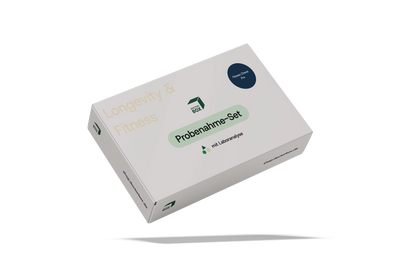
Fitness Check Pro – Your health and performance check for body & heart. The Fitness Check Pro gives you comprehensive insights into your muscle an...
Analyse im Fachlabor
Diskrete Verpackung
Ergebnis in 72h

Training planning and program design

An effective functional training program is more than just a random collection of exercises. Thoughtful planning ensures that all movement patterns are trained in a balanced way, that progression occurs, and that sufficient recovery is incorporated.

The structure of a single training session typically follows a pattern: warm-up, activation, main part, finisher, and cool-down. The warm-up prepares the body and mind for the exertion: general cardio, dynamic stretching, mobility exercises. The activation phase engages specific muscle groups that will be used in the main part – for example, glute bridges before squats.

The main part contains the most challenging exercises, especially if you're still new to the program. Complex, heavy movements like deadlifts or squats come first. These are followed by accessory exercises and possibly isolation work. The order is important: technically demanding exercises belong at the beginning, before fatigue impairs your technique.

The exercise selection should cover all fundamental movement patterns spread throughout the week. A three-day program could be structured as follows: Day A – lower body dominant (squat, hip hinge), Day B – upper body push (horizontal and vertical press), Day C – upper body pull plus loaded carries. Alternatively, full-body sessions are possible, incorporating a little of everything in each session.

Progression is essential for continuous improvement. The simplest form is increasing the weight while keeping the exercise the same. Other progression variables include repetitions, sets, tempo, rest periods, exercise variations, and training frequency. A training log helps track progress and improve systematically.

Periodization – the systematic variation of intensity and volume over weeks and months – prevents plateaus and overtraining. Simple linear periodization (gradual increase) works for beginners. Advanced athletes benefit from undulating periodization with phases focusing on different areas: strength, hypertrophy, power, and recovery.

Rest days are not wasted time, but an integral part of training. During the recovery phase, adaptation and growth occur. Don't train at full intensity every day – plan lighter days, active recovery, and complete rest days. Overtraining leads to decreased performance, injuries, and burnout.

Functional training versus classic gym

The question of whether functional training or traditional machine training is 'better' is often asked, but it's incorrectly phrased. Both approaches have their merits and can be beneficial depending on goals, context, and preferences. Understanding the differences will help you make the right decision for your situation.

Traditional gyms with guided machines offer advantages: the movements are easy to learn, the risk of injury is low when used correctly, and the isolation of individual muscles allows for targeted bodybuilding. For people primarily aiming to build muscle mass, or for rehabilitation patients who need controlled movements, machines can certainly be beneficial.

The limitations of traditional machines lie in their lack of transferability. A machine guides the movement – ​​you don't have to stabilize, coordinate, or work on multiple planes. The trained pattern only exists on the machine. When lifting an object in real life, this guidance is missing, and untrained stabilizers can fail. The 'strength' gained on the machine doesn't necessarily translate to real-life situations.

Functional training emphasizes transferability. The movements trained resemble those of everyday life and sports. The integration of multiple muscle groups, work in all planes of motion, and the challenge to balance and coordination develop fitness that 'works'. The downside: The learning curve is steeper, the risk of injury with poor technique is higher, and for maximum hypertrophy, isolation is sometimes more effective.

The best solution for most people lies in a combination. Functional basic exercises form the foundation: squat, hinge, push, pull, carry. Supplementary isolation exercises—whether on machines or with free weights—address specific weaknesses or aesthetic goals. This hybrid approach maximizes the benefits of both methods.

Your personal goal determines the emphasis. For general fitness and everyday practicality, functional training is superior. For bodybuilding aesthetics, isolation exercises are more important. For sport-specific performance, it depends on the sport. Most people benefit from a functional foundation with targeted additions.

Common mistakes and how to avoid them

Functional training offers many benefits, but also has its pitfalls, especially for beginners. Knowing and avoiding the following common mistakes will help you train safely and effectively.

The most common mistake is complexity without a foundation. Many are drawn in by spectacular exercises on Instagram and attempt exercises they aren't ready for. Before you start single-leg squats on a wobble board with a kettlebell, you should have mastered two-legged squats with a solid weight. Master the basics before attempting advanced variations. Progression has a sequence.

Insufficient core activation is another common mistake. Many trainees neglect conscious core engagement and rely on passive structures – this often results in back problems. Learn to actively engage your core during every exercise. Imagine someone is about to punch your stomach – this tension should be present in all exercises.

Too rapid a progression leads to a decline in technique and injuries. The desire to lift more weight is natural, but patience is essential. Only increase the weight when the current level can be completed effortlessly and with clean technique. Injury-free, long-term progress beats short-term records that end in injury.

An unbalanced program design arises when certain movement patterns are favored. Many people push more than they pull, train their front muscles more than their back muscles, and neglect single-leg exercises and rotation. These imbalances lead to postural problems and increased susceptibility to injury. Ensure a balanced representation of all movement patterns.

Training to absolute failure in every session is a recipe for overtraining. Functional training can be intense, but intensity must be periodized. Not every exercise and not every session needs to push you to your limit. Leaving some sets in reserve allows for better overall quality and faster recovery.

Neglecting mobility and recovery is the silent killer of long-term progress. Stretching, foam rolling, sleep, and rest days are not optional extras, but integral parts of a training program. Without them, stiffness, fatigue, and microscopic damage accumulate into bigger problems.

Getting started with functional training – your first steps

Getting started with functional training doesn't require any special equipment or prior knowledge, but it does require a certain approach. The following recommendations will help you get started safely and make rapid progress.

Start with a movement analysis, ideally conducted by a qualified trainer. Where are your limitations in mobility and stability? Can you perform a deep squat with an upright torso? Do you have the shoulder mobility for overhead positions? Are there any obvious asymmetries between your right and left sides? This assessment will determine where you start and which areas to prioritize.

The first few weeks should be dedicated to learning the basic movements. Air squats, hip hinges with a broomstick, push-ups (possibly elevated), light-resistance rows, and planks are a good starting point. Focus on quality, not intensity. Video recordings of your exercises will help you identify mistakes you might not feel.

A minimal home setup for beginners could consist of a kettlebell, a resistance band, and a mat. With this, numerous effective exercises are possible: goblet squats, kettlebell swings, deadlifts, rows, Turkish get-ups, band pull-ups, and bodyweight exercises. If you have access to a functional gym, even better – take advantage of the wider range of equipment and, ideally, the coaching.

A simple beginner program, done three times a week, could look like this: Warm-up (5-10 minutes), squat variation (3 sets), hinge variation (3 sets), pressing exercise (3 sets), pulling exercise (3 sets), core exercise (2-3 sets), cool-down. The exercises and variations can vary, but the pattern remains consistent. Start with weights you can handle for 10-12 clean repetitions.

Coaching is more valuable in functional training than in machine-based programs. The complex movement patterns require technical nuances that are difficult to learn on your own. Invest in a few personal training sessions or group classes with expert instruction. The cost of coaching is an investment in safety and faster progress.

Be patient with yourself. Functional fitness develops over months and years, not weeks. Movement patterns become more automatic over time, strength grows, and coordination improves. Enjoy the process and celebrate small steps forward – the big transformation is the result of many small steps.

Häufig gestellte Fragen

Functional training emphasizes complex, multi-joint movements that mimic natural movement patterns from everyday life and sports. In contrast, traditional fitness training often focuses on isolated muscle exercises on machines. The key difference lies in the transfer of skills: Functional exercises improve your ability to function in real-life situations—lifting, carrying, balancing. Isolated exercises strengthen individual muscles without training their coordination. Both approaches have their merits, but for overall fitness and everyday functionality, functional training is superior.

No, your own body weight is sufficient to get started. Squats, lunges, push-ups, planks, and many other effective exercises require no equipment. As you gain experience, kettlebells, resistance bands, and a pull-up bar become useful additions. A fully equipped functional gym will also have barbells, medicine balls, suspension trainers, and more. But it's possible to start with minimal or no equipment.

Three to four sessions per week are optimal for most people. This allows for sufficient training stimuli while also enabling recovery. Beginners can start with two to three sessions and gradually increase the frequency. The sessions can be full-body workouts or divided into focus areas. Consistency over time is crucial – regular training over several months is more effective than sporadic, intense phases.

Yes, definitely. Complex exercises like deadlifts, squats, and pull-ups are excellent muscle-building exercises. The hypertrophy effects can be comparable to dedicated bodybuilding programs if the volume and intensity are right. The difference: You build functional muscle mass that not only looks good but is also powerful. For maximum hypertrophy, you can supplement this functional foundation with targeted isolation exercises.

Absolutely – provided the progression is appropriate. The fundamental movement patterns are natural and accessible to everyone. Beginners start with simple variations and light resistance, gradually increasing the intensity. The learning curve is steeper than with machines, which is why coaching is particularly valuable for beginners. With a patient approach, functional training is suitable for everyone, regardless of their current fitness level.

The core encompasses the muscles of the torso – not just the visible abdominal muscles, but also the obliques, lower back, hip flexors, and diaphragm. These muscles form the center through which all power is transferred between the upper and lower body. A strong, stable core enables powerful movements, protects the spine, and improves posture. In functional training, core work is integrated into almost every exercise, not just isolated abdominal exercises.

CrossFit is a specific brand and methodology within the broader field of functional training. Both utilize similar exercises and principles, but CrossFit emphasizes standardized WODs (Workouts of the Day), time pressure, and competition. Functional training as a concept is broader and can be more individualized, without the competitive component. CrossFit gyms (boxes) are licensed and follow a specific program; functional training can be practiced anywhere and in various formats.

Yes, functional training can effectively contribute to weight loss. Complex exercises that engage multiple muscle groups burn more calories than isolation exercises. HIIT and circuit training further increase calorie expenditure and create an afterburn effect. The muscle mass gained increases the basal metabolic rate in the long term. However, nutrition is the most important factor for weight loss – no amount of exercise can compensate for a poor diet. The optimal approach is to combine functional training with a proper diet.

Suitable exercises for beginners include: goblet squats (squats with weight in front of the chest), Romanian deadlifts (hip bends with straight legs), push-ups (possibly elevated), horizontal rows (with a band or suspension trainer), planks, and lunges. These exercises cover the fundamental movement patterns and are technically accessible. Start with your own body weight or light resistance and gradually increase the intensity. Technique before intensity is the mantra for beginners.

For many people, yes – a strong, stable core and balanced muscles can alleviate and prevent back pain. However, in case of acute pain or diagnosed problems, you should first consult a doctor or physiotherapist. Not every exercise is suitable for every back. Under expert guidance, functional training can be part of the therapy, with adapted exercises that stabilize the spine without putting strain on it. Training on your own for back problems carries risks.

Bereit für den nächsten Schritt?

Du hast jetzt alle wichtigen Informationen. Sorge für deine Gesundheit mit einem zuverlässigen Heimtest.

For the fitness check
DoctorBox AI Advisor
Hey! 👋 What health concerns do you have? I will help you find the right test.

AI-powered – Answers may be inaccurate.

Submit Withdrawal Request

Please fill out the following form to submit your withdrawal request.