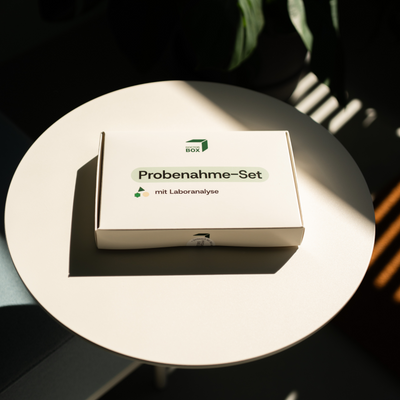


A runny nose in spring, itchy skin after eating, or unexplained digestive problems – allergies can manifest in many ways. But often it remains unclear what triggers the symptoms. A comprehensive allergy test can provide clarity.
With the DoctorBox allergy test, you can conveniently test for 295 different allergens from the comfort of your home – from pollen and food to pet dander. This article explains how the test works, which allergens are covered, and what the results mean for you.
Allergies · Prevention & Diagnostics
Allergy test for home use: Detect 295 allergens with a blood test
What is an allergy and how does it develop?
An allergy is an overreaction of the immune system to otherwise harmless substances – so-called allergens. The body produces IgE antibodies, which trigger an immune response upon renewed contact and cause typical allergy symptoms.

Awareness
Upon first contact with an allergen, the immune system "learns" to recognize the substance and produces specific IgE antibodies. This phase is usually asymptomatic – it is called sensitization.

Allergic reaction
Upon renewed contact, the IgE antibodies recognize the allergen and trigger a cascade: histamine and other messenger substances are released and cause the typical symptoms such as itching, swelling or shortness of breath.

Cross-reactions
Sometimes the body reacts to similar proteins in other substances – for example, someone with a birch pollen allergy might also react to apples. Modern tests can distinguish true sensitizations from such cross-reactions.
Recognizing typical allergy symptoms
Allergies can manifest in very different ways – depending on the allergen and the type of exposure. Symptoms range from mild discomfort to life-threatening reactions.

Eyes & Nose
Watery, itchy or red eyes, sneezing, blocked or runny nose – typical symptoms of hay fever and allergies to house dust mites or animal hair.

respiratory tract
Coughing, wheezing, chest tightness, or shortness of breath. Allergic asthma can develop with chronic exposure – all the more reason for early diagnosis.

skin
Itching, redness, hives (urticaria), eczema, or swelling (angioedema). Skin reactions can occur with both contact allergies and food allergies.

gastrointestinal tract
Abdominal pain, nausea, vomiting, diarrhea, or bloating – especially in cases of food allergies. These symptoms are often mistaken for intolerances.
Important to know:
An allergy (IgE-mediated) is not the same as an intolerance (e.g., lactose intolerance). In an allergy, the immune system is involved, while in an intolerance, a digestive enzyme is usually missing. The IgE-based allergy test can only detect true allergies – not intolerances.
295 allergens from 8 categories
The DoctorBox allergy test analyzes your blood for IgE antibodies against 295 different allergens. This gives you a comprehensive picture of your sensitization status – and allows you to take targeted action.
61 types of pollen
(Grasses, birch, ragweed, etc.)
(Grasses, birch, ragweed, etc.)
24 mite species
(House dust, storage mites)
(House dust, storage mites)
103 Plant-based foods
(Nuts, fruit, vegetables, spices)
(Nuts, fruit, vegetables, spices)
40 Animal-based foods
(Milk, eggs, fish, meat)
(Milk, eggs, fish, meat)
15 molds & yeasts
20 Animal hairs, epithelial cells & dander
9 insecticides
(Bee, wasp, etc.)
(Bee, wasp, etc.)
10+ Other Environmental Allergens
(Latex, natural rubber, etc.)
(Latex, natural rubber, etc.)
ALEX® IgE allergen screening
The test is based on modern ALEX® technology (Allergy Explorer) – a multiplex method that simultaneously analyzes hundreds of allergens and their molecular components. The advantage: The technology can distinguish between true sensitizations and mere cross-reactivity. This way, you know exactly which allergens are truly relevant.
This is how the allergy test works
The entire process is designed to offer you maximum flexibility – no waiting time at the doctor's office, no appointment problems. You'll receive your results in four simple steps.
1
Order a test
After ordering, you will receive the test kit by mail – including all materials for blood collection, step-by-step instructions and a prepaid return envelope.
2
Take a sample at home
Blood is drawn very simply by finger prick – you only need about 0.5 ml of capillary blood. The enclosed instructions explain each step clearly.
3
Scan barcode & send
Scan the enclosed barcode in the DoctorBox app to assign your sample to you. Then pack the sample and drop off the prepaid envelope at the post office – ideally on the same day.
4
Receive result digitally
After the laboratory analysis, you will receive your results within 3–7 days directly in the DoctorBox app – clearly presented with a traffic light system and reaction strength for each allergen tested.
Tip for quick results:
It's best to send your sample between Monday and Wednesday . This way it reaches the lab before the weekend and you'll receive your results particularly quickly.
Advantages of home testing compared to a doctor's visit
An allergy test at the doctor's office can be useful – but it often involves long waiting times, multiple appointments, and limited test allergen panels. A home test offers a convenient alternative.

Flexible & comfortable
No doctor's appointment needed – you can take the test whenever and wherever you want. Ideal for people with little time or limited mobility.

More comprehensive than prick tests
Doctors often only test for 20–50 allergens using skin tests. With the ALEX® screening, you test for 295 allergens in a single test.

Quick result
Results within 3-7 days of lab receipt – significantly faster than the traditional route via general practitioner, referral and specialist appointment.

Understandable analysis
Your results will be presented visually – using a traffic light system (green/yellow/red) and reaction intensity. This allows you to see at a glance which allergens are relevant.
What to do if the result is positive.
A positive test result means that your body has produced IgE antibodies against certain allergens. This is important information – but not yet a diagnosis. Here you can find out what to do next.
Recommended next steps
- Discuss the results with your doctor: The lab results show sensitivities – whether these are also clinically relevant (i.e., causing symptoms) should be clarified with a doctor. Allergists can interpret the results.
- Allergen avoidance: In cases of clear triggers, avoiding contact is helpful. For food allergies, this means adjusting your diet; for pollen allergies, it may involve using pollen calendars.
- Symptomatic treatment: Antihistamines, nasal sprays, or eye drops can relieve acute symptoms. Your doctor can recommend suitable medications.
- Consider hyposensitization: For certain allergies (e.g., pollen, house dust mites, insect venom), specific immunotherapy (SIT) can provide long-term relief. It "trains" the immune system to react less strongly.
- Emergency kit for severe allergies: If you have a known risk of anaphylaxis (e.g., insect venom allergies or certain food allergies), you should always carry an emergency kit with an adrenaline auto-injector.
Frequently asked questions about allergy testing

Is the test also suitable for children?
Yes, the test can also be performed on children. Blood collection via finger prick is gentle. In very young children, the sample should be taken by an adult.
Do I need to be sober?
No, you don't need to fast for the IgE allergy test. You can take the sample at any time of day – regardless of meals.
Do medications distort the result?
Antihistamines do not affect the IgE blood test (unlike the skin prick test). Prolonged use of cortisone preparations can slightly affect IgE levels – if in doubt, consult your doctor.
Can I take multiple tests at the same time?
Yes, you can combine the allergy test with other DoctorBox tests. Make sure you take enough blood and label the samples correctly.
Does the test replace a visit to the doctor?
The test provides valuable information about your sensitization status. However, for a complete diagnosis and treatment recommendation, you should discuss the results with a doctor.
Are intolerances also tested for?
No, the test measures IgE antibodies and thus detects true allergies . Intolerances such as lactose intolerance or histamine intolerance are not detected – there are special tests for those.
Conclusion: Clarity about your allergies – easily from home
Allergies can significantly impair quality of life – from seasonal hay fever to potentially dangerous food allergies. Knowing your triggers allows you to take targeted action: through avoidance, treatment, or specific immunotherapy.
The DoctorBox allergy test with 295 allergens offers you a comprehensive analysis – conveniently from home, with state-of-the-art ALEX® technology and easy-to-understand results in the app. This way, you get a clear picture of your allergy profile in just a few days.
Order your allergy test now for €229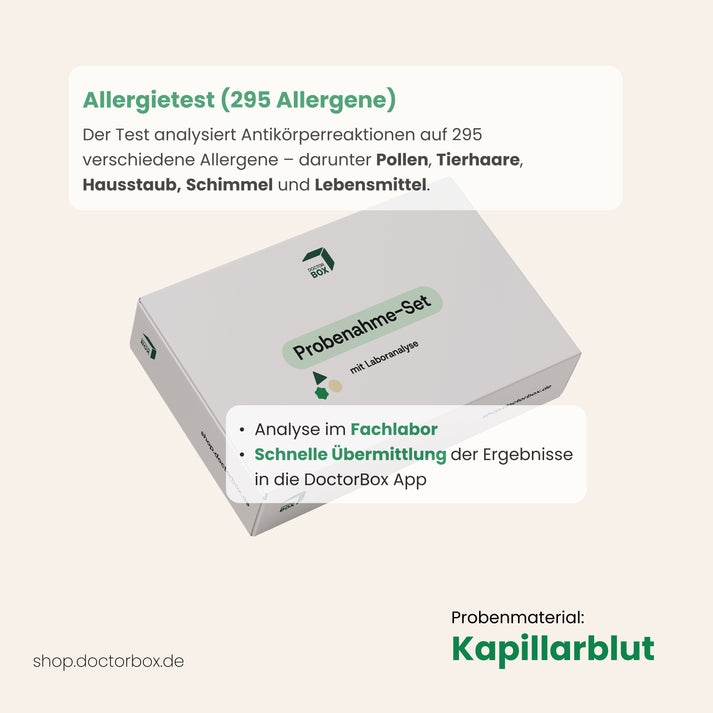
Scientific sources & further information
- Robert Koch Institute – Allergies in Germany
- Allergy Information Service of the Helmholtz Center Munich
- German Society for Allergology and Clinical Immunology (DGAKI)
- German Allergy and Asthma Association (DAAB)
- Matricardi PM et al. EAACI Molecular Allergology User's Guide. Pediatric Allergy Immunol. 2016;27 Suppl 23:1-250
- AWMF S2k guideline: Allergen immunotherapy (AIT)


